Making your own calendula oil at home is simple and so much better than store bout infusions. With just dried calendula flowers and a good carrier oil like coconut oil or jojoba oil, you can create a soothing infused oil perfect for skin care, herbal remedies, or DIY balms. Here’s how to get started in just a few easy steps!

Table of Contents
Six months ago, I didn’t know anything about calendula oil.
Now, I think about calendula oil more than a single human being should think about any single flower.
Why? One word: Eczema.
*que menacing music*
My son developed horrific eczema around five months old, and it wrecked our home. His poor skin was so damaged, so angry, and SO particular about what it would and would not accept as treatment.
But it wasn’t just the eczema.
Because of the gut imbalance causing the eczema, he was also prone to really angry diaper rashes, which only responded to one brand of diaper cream.
When I started reading the labels of the eczema products and diaper creams that worked for his skin, I found one common ingredient: calendula flowers. That was the golden ticket for his skin, and I soon learned he wasn’t the only one.
Calendula oil has been treasured for centuries as a gentle, soothing remedy for skin irritation, dryness, and everyday care. Unlike store-bought versions, making your own calendula oil at home lets you control the quality of ingredients and ensure a truly natural product. The process is simple: all you need are dried calendula flowers, a carrier oil of your choice, and a little patience.
In this step-by-step guide, I’ll show you how to make calendula oil using three different methods—solar infusion, slow heating, and a quick warm infusion. Each technique transforms calendula blossoms into a golden infused oil that can be used on its own or as a base for salves, balms, and creams. Whether you prefer a traditional sun-soaked infusion or a faster stovetop approach, you’ll find a method that fits your lifestyle.
By the end, you’ll not only have a jar of nourishing homemade calendula oil, but also the confidence to incorporate this herbal ally into your daily routine.
What is Calendula Oil?
Calendula oil is a simple, natural remedy made by soaking dried calendula flowers in a carrier oil like olive, jojoba, or coconut oil. Instead of being distilled like essential oils, calendula is made as an infused oil, which means the soothing properties of the petals slowly transfer into the oil, which is later easily absorbed into the skin.
The result is a golden, skin-loving oil that’s gentle enough for the whole family. Many people use it to calm dry or irritated skin, add extra moisture, or as a base for homemade salves, balms, and lotions. Because it’s so easy to make with just two ingredients, calendula oil is one of the most beginner-friendly herbal projects you can try at home.
Benefits of Calendula oil
Calendula oil is valued for its gentle but powerful skin-supporting properties. When dried calendula flowers are infused into oil, they release compounds that help calm, protect, and restore the skin. Some of the key benefits include:
- Calms irritation – Calendula has natural soothing qualities that can help reduce redness and sensitivity.
- Supports skin repair – Many people use calendula oil to encourage the skin’s natural healing process for minor cuts, scrapes, or dryness.
- Antioxidant-rich – The bright orange petals are packed with antioxidants, which can help protect skin from environmental stress like pollution, irritants, and allergens.
- Gentle and nourishing – Unlike some stronger herbal oils, calendula is mild enough for all skin types, even for babies and those with sensitive skin.
- Versatile for natural living – From DIY balms to everyday moisturizing, calendula oil offers a wide range of benefits in one simple infusion.
By making your own infused oil, you get all these natural skin-loving benefits without added chemicals or preservatives.
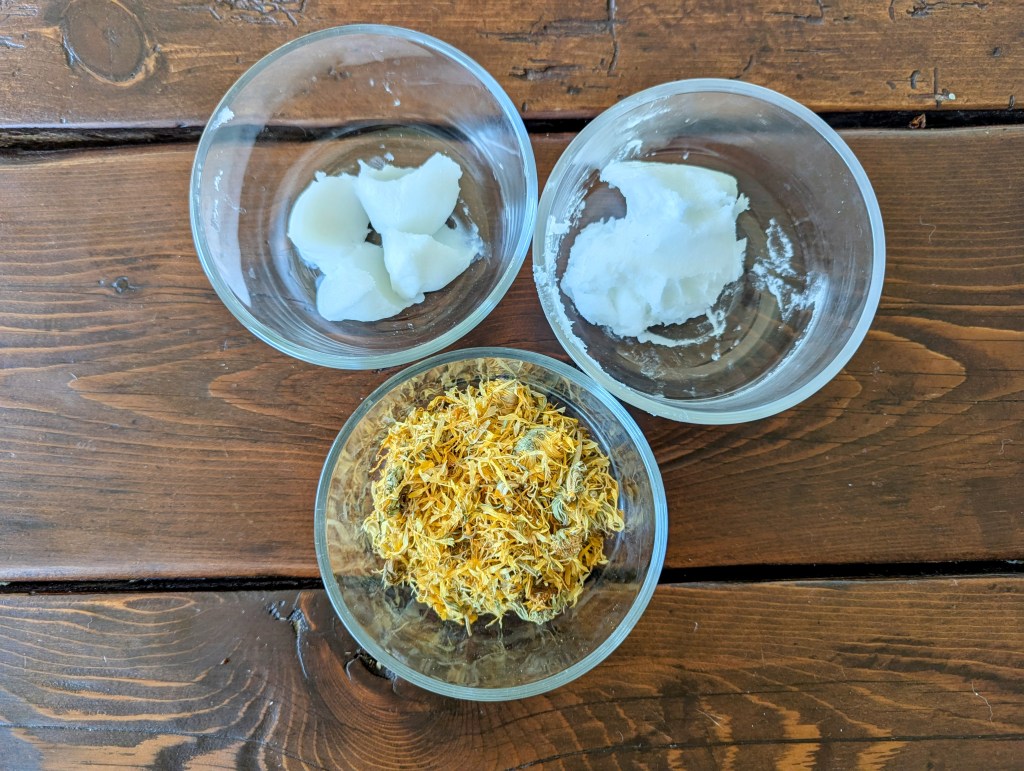
Supplies you’ll Need
- Dried calendula flowers. I like EarthWise Aromatics because they are 100% organic.
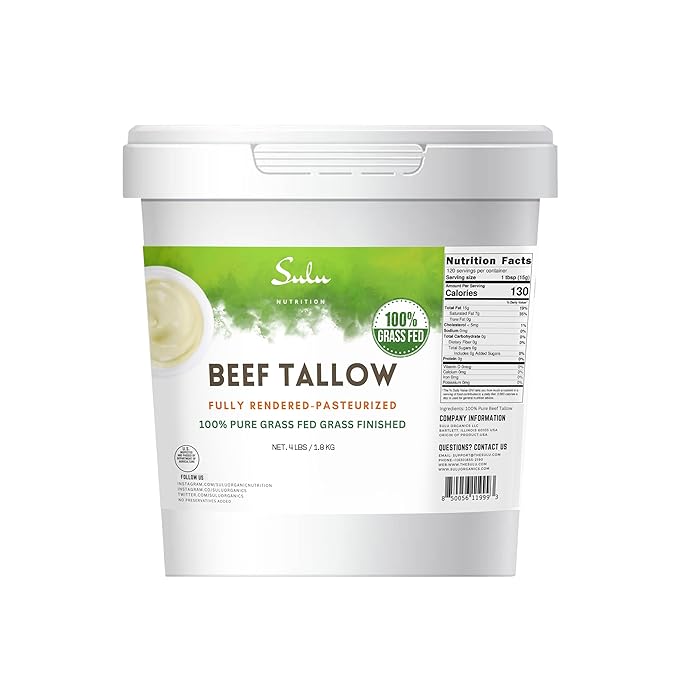
- Carrier oil (olive, jojoba, almond, etc.) I used coconut oil and beef tallow for this tutorial, but you can use just about anything!
- Clean glass jar with lid
- Strainer + cheesecloth
- Storage bottles like small mason jars or glass dropper bottles
- Crockpot (optional, for slow infusion method)
- Metal trivet if using the stovetop method, to protect the glass jar.
I’ve rounded up my favorite ingredients and tools so you can easily grab everything you need in one place:




How to Make Calendula Oil: 3 Simple Methods
Making your own calendula oil is easier than you might think! Whether you want to take the slow, traditional route or speed things up, these three methods will help you create a beautiful, skin-loving infused oil.
1. Solar Infusion (Sunlight Method)
This is the classic, hands-off method.
- Place dried calendula flowers in a clean glass jar and cover them completely with your choice of oil (such as jojoba, olive, or sunflower). This method will NOT work for solid oils like tallow or coconut oil.
- Seal the jar and set it in a sunny windowsill.
- Let it infuse for 3–6 weeks, giving it a gentle shake every few days.
Pros: Gentle and traditional; preserves the natural properties of the flowers.
Cons: Requires patience—this is not a quick method.
2. Slow Cooker or Double Boiler Method
For a bit more speed without rushing the process:
- If using solid oil, melt it gently. Then, combine your dried flowers and oil in a jar or heat-safe container, pushing the flowers down so the oil completely covers them.
- Place the jar in a slow cooker on the lowest setting or use a double boiler.
- Let the oil warm gently for 4–6 hours.
- Once cooled, strain out the flowers and store the infused oil in a clean jar.
Pros: Faster than sunlight; still preserves most of the flower’s benefits.
Cons: Overheating can degrade the oil, so keep the temperature low.
3. Quick Warm Infusion (Stovetop Method)
When you’re short on time, this is the fastest option:
- Fill a saucepan with a few inches of water and bring to a gentle simmer. Place a metal trivet or heatproof support at the bottom to protect the glass from direct heat.
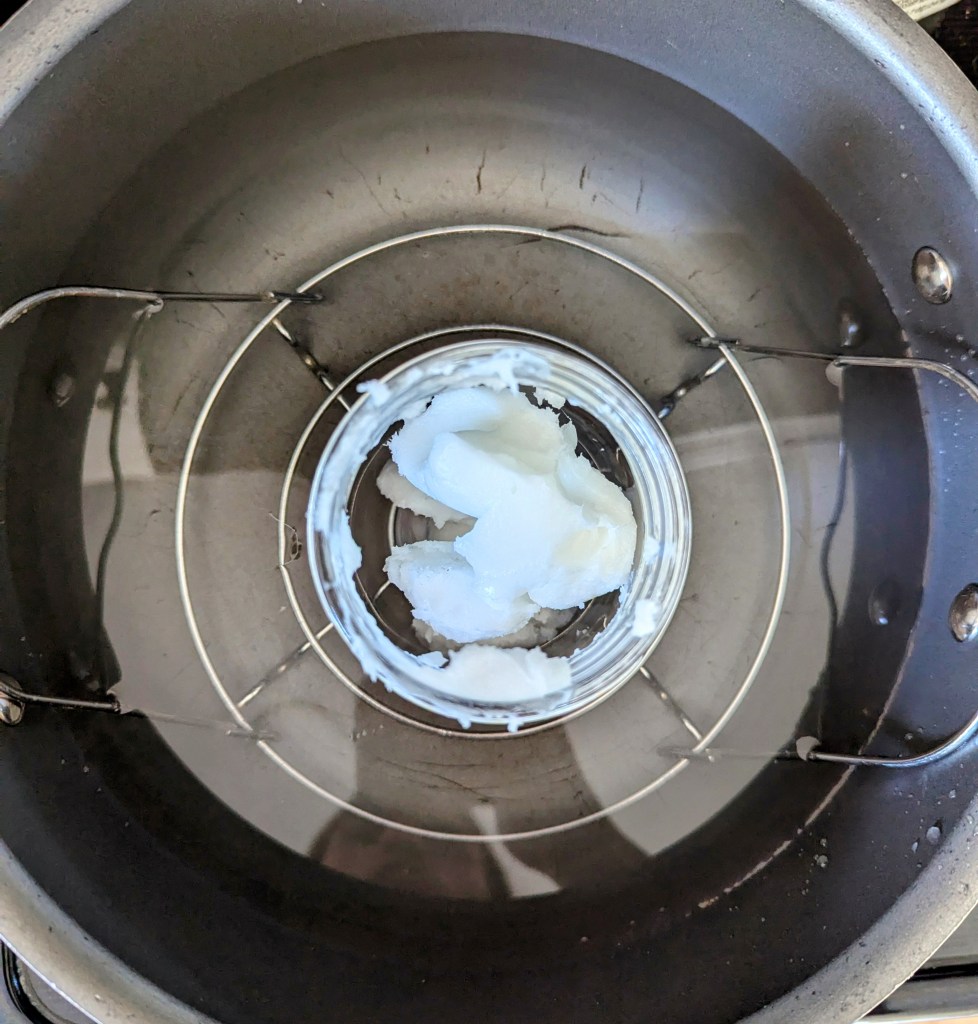
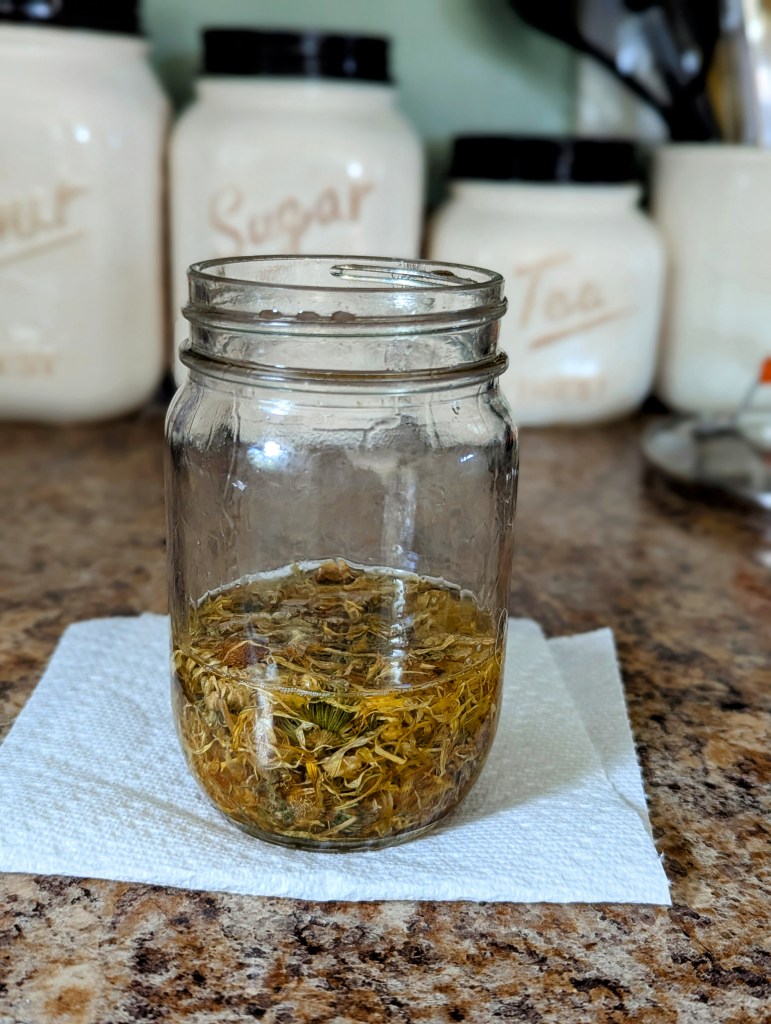
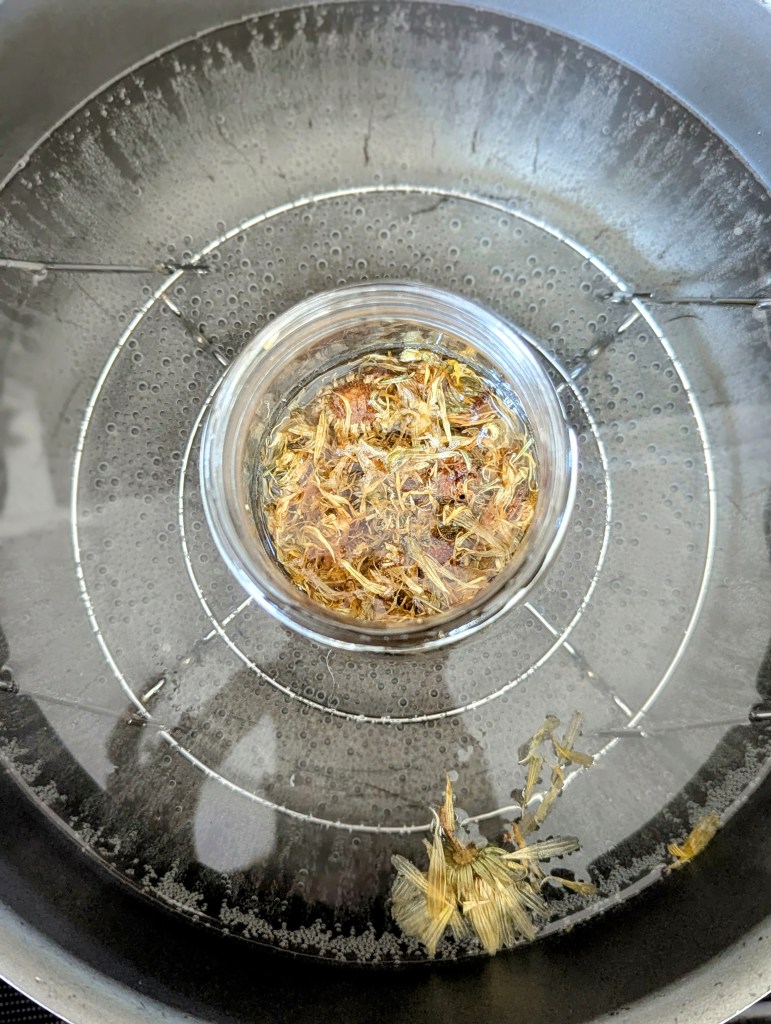
- If using solid oil, melt it gently. Then, combine your dried flowers and oil in a jar or heat-safe container, pushing the flowers down so the oil completely covers them. Place the jar in the water bath on top of the trivet.
- Let it infuse for 1–2 hours, keeping the water at a low simmer.
- Remove, let cool, and strain the flowers from the oil.
Pros: Quickest method; great for when you need your oil soon.
Cons: Shorter shelf life and slightly less potent than slower methods.
How to Strain Calendula Oil
Once your infusion is ready, it’s time to separate the oil from the flowers:
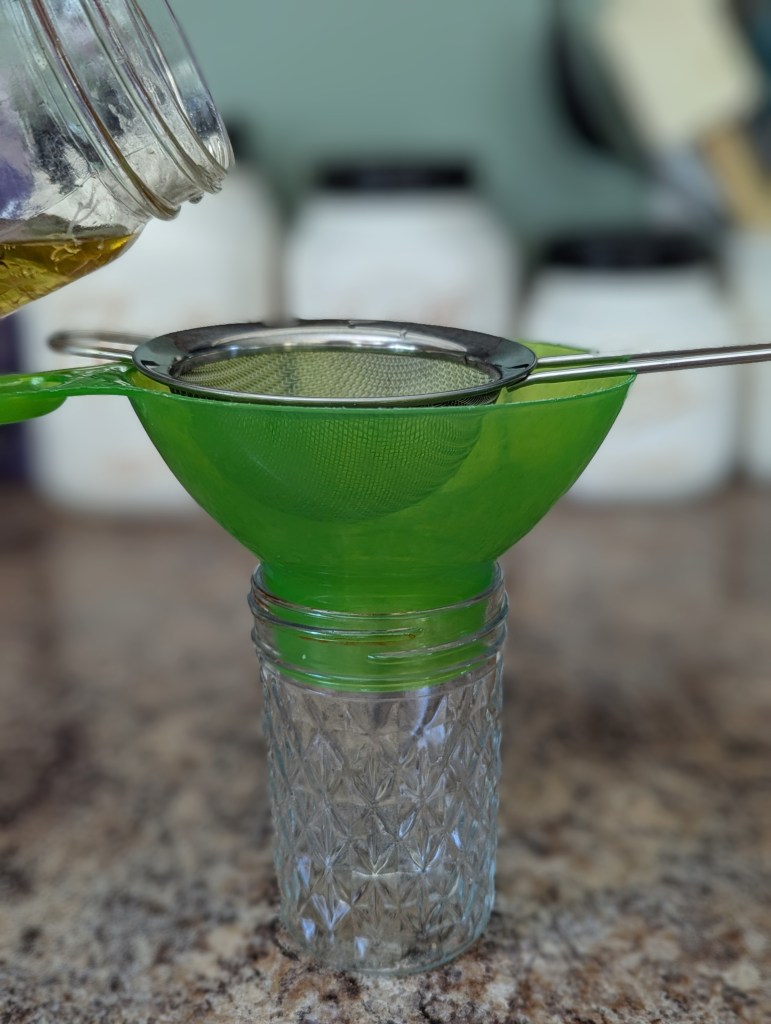
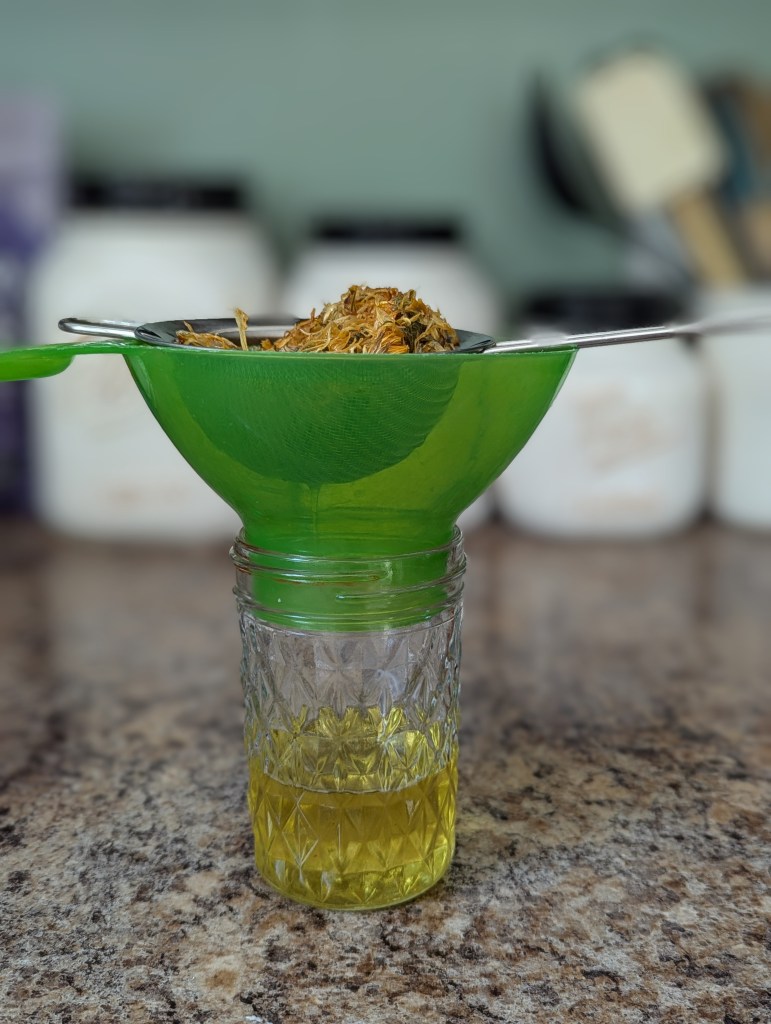
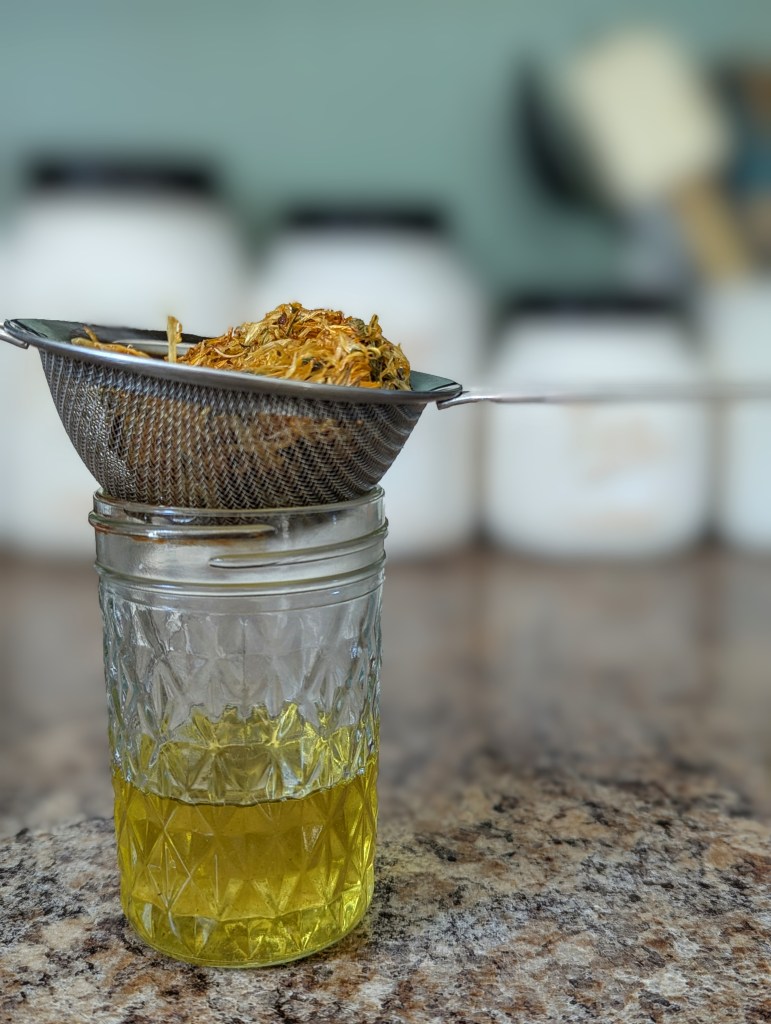
- Line a fine-mesh strainer or sieve with cheesecloth.
- Place the strainer over a clean bowl or jar.
- Pour the oil and flowers into the strainer slowly.
- Gently press or squeeze the flowers through the cheesecloth to get every drop of oil.
- Discard the used flowers (or compost them!).
Tip: Avoid pressing too hard if you want a clear oil; pressing too aggressively can add sediment.
How to Store Calendula Oil
Proper storage keeps your oil fresh and potent. For best results:
- Choose the right container: Dark glass jars or bottles work best to protect the oil from light.
- Seal tightly: Ensure lids or droppers are tightly closed to prevent air exposure.
- Keep it cool and dry: Store at room temperature in a cupboard or in the fridge for longer shelf life.
- Label it: Note the date of infusion. Most homemade calendula oils last 6–12 months.
How to Use Calendula Oil
Calendula oil is gentle, versatile, and perfect for DIY skincare. Here are some simple ways to use it:
- Moisturizer: Massage a few drops into dry skin, elbows, or heels. It’s even gentle enough to use on your face!
- Lip Care: Apply to chapped lips for a soothing, natural balm.
- Soothing Salves: Combine with beeswax to make a healing salve for minor cuts, scrapes, or irritated skin.
- Bath Oil: Add a tablespoon to your bath for a calming, skin-nourishing soak.
- Massage Oil: Use alone or mix with other carrier oils for a relaxing massage.
- Diaper cream: Combine with zinc oxide and bentonite clay for a healing solution to diaper rash.
Tip: Always do a patch test first, especially if you have sensitive skin.
FAQs
Can Calendula oil go Bad?
Yes, like any infused oil, calendula oil can go bad over time. Proper storage in a cool, dark place—preferably in a glass jar or amber bottle—can extend its shelf life to 6–12 months. Always check for an off smell or discoloration before use.
Can Calendula Oil be Used on Face?
Absolutely! Calendula oil is gentle and soothing, making it great for sensitive or dry skin. Use a few drops as a moisturizer, add it to homemade creams, or mix with other carrier oils for a nourishing facial treatment. Do a patch test first if you have very sensitive skin.
Can Calendula Oil be Ingested?
Calendula oil is typically made for external use, not ingestion. If you want to use calendula internally, look for culinary-grade calendula prepared specifically for cooking or teas. Always consult a healthcare professional before ingesting any herbal oil.
Where to Buy Calendula Oil?
If you don’t want to infuse your own oil, you can still enjoy a high-quality from Organic Botanicals or MJ’s Herbals or Ora’s Amazing Herbals for a thicker salve.
Final Thoughts
Learning how to make calendula oil at home is easy and will make you feel like you’re in Walnut Grove with Laura Ingalls. For a moment, you’ll be back in time, using what you have to heal your skin naturally. With just a handful of dried calendula flowers and your favorite carrier oil, you can create a versatile infused oil that supports healthy skin, soothes irritation, and adds a touch of herbal care to your DIY creations.
Whether you choose the slow and traditional sunlight method, the steady warmth of a slow cooker, or the quick stovetop infusion, you’ll end up with a golden oil that’s as useful as it is beautiful.
Now it’s your turn—pick a method, gather your calendula, and start infusing. Your skin will thank you for it!
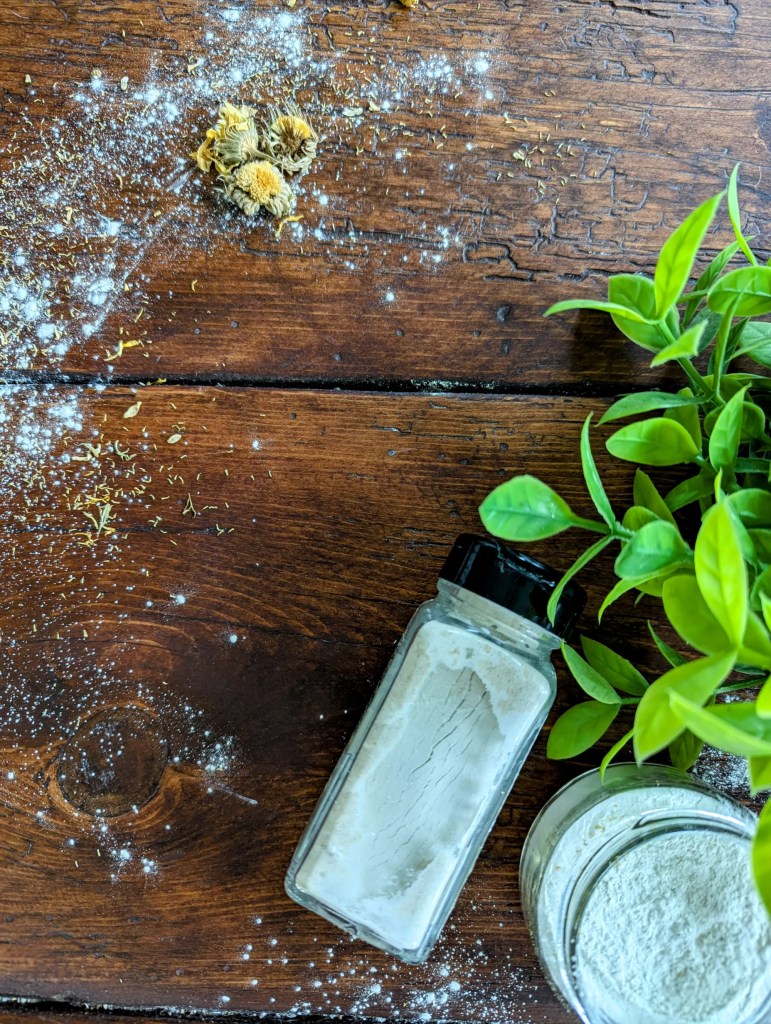

[…] that reason, I started making my own Diaper Rash Ointment Cream with calendula oil, and it works just as well as anything I’ve ever bought, for a fraction of the […]
[…] If you like this post, be sure to check out our guide for How to Make Calendula Oil! […]