This post may contain affiliate links. Please read our disclosure policy for more information.
If you’re searching for natural remedies for severe diaper rash, you’re not alone—and you’re in the right place. Diaper rash can be especially painful when it becomes bacterial or spreads to sensitive areas such as the inner thighs, causing raw, inflamed skin that needs gentle but effective care-and fast.
In this post, we’ll explore safe, natural remedies that can help soothe irritation, fight infection, and support healing—without harsh chemicals or synthetic ingredients. Whether your baby is dealing with a stubborn rash or you’re hoping to prevent future flare-ups, these tips will help you care for their skin with confidence.
Be sure to check out our recipes for Diaper Rash Ointment Cream and Homemade Baby Powder to help heal your little one’s diaper rash.

Table of Contents
Diaper rash is one of those things that can sneak up on you and take over your life.
Maybe you’re thinking… My baby has never had a diaper rash that dominated my life. What are you talking about?
In that case, praise the Lord.
If you’re thinking, “Yes, managing diaper rash has completely taken over our home!” then you’re in the right place.
Welcome. And also, I’m so sorry.
My first baby had the occasional diaper rash that was localized to her bottom and didn’t give her a whole lot of trouble. I put a little zinc oxide diaper cream on her skin, and we went on about our business.
Then, my son was born—my precious boy, who taught us all about eczema and the horrors of bacterial diaper rash.
What Is Bacterial Diaper Rash?
Bacterial diaper rash occurs when a regular rash becomes infected with bacteria—most commonly Staphylococcus or Streptococcus. It often develops when the skin is broken from prolonged moisture, friction, or an existing rash, creating an entry point for bacteria.
An imbalance in the gut microbiome can also cause bacterial diaper rash. The gut microbiome plays a crucial role in your baby’s immune system and digestion. When it’s out of balance—due to antibiotics, illness, diet changes, or lack of beneficial bacteria—it can lead to:
- Frequent or loose stools, which irritate the skin and increase moisture in the diaper area
- Overgrowth of harmful bacteria, both in the gut and potentially on the skin
- A weakened skin barrier, which makes it easier for bacteria (like Staphylococcus or Streptococcus) to cause infection
In babies with gut imbalance, the stool may be more acidic or frequent, creating a perfect environment for bacterial diaper rash to develop—especially in warm, moist areas like the inner thighs and diaper folds, but it can also spread toward the neck and face (ask me how I know?).
Signs of Bacterial Diaper Rash:
Bacterial diaper rash can present as any or all of the following:
- Bright red, inflamed skin that may spread to the inner thighs and up the stomach
- Oozing, yellowish fluid or crusting
- Pimples, blisters, or open sores
- Rash that worsens quickly or doesn’t respond to typical remedies
- Possible fever (in more severe cases)
If you didn’t know that bacterial diaper rash was a thing, you’re not alone. Most moms don’t know about it until they’re confronted with the angry, spreading rash and an even angrier, screaming baby.
*hello, it’s me*
Natural Remedies for severe Diaper Rash
Whether you’re dealing with a full-blown bacterial diaper rash or a plain old angry diaper rash, rest assured that you can treat and heal it at home. Below are some tried-and-true methods that have been proven to soothe the symptoms and treat the cause of diaper rash-naturally.
That being said, every baby is different. Not every treatment will work for every baby. That’s why I’m sharing a whole list of remedies to try, so hopefully, you’ll find something on the list that’s perfect for your little one.
If you’re reading this post, you’re probably feeling pretty desperate. Desperate to get rid of the rash. Desperate for diaper changes to be less horrific. Desperate to find relief for your baby.
I get it.
That’s how I know it’s easy to jump into everything at once instead of trying one thing at a time.
Instead, try a couple of things and see if they work. You don’t need all of these remedies at the moment. You can start with what you already have at home and build from there.

1. Coconut oil
Let’s start with something you probably have in your pantry: coconut oil. Coconut oil is a great remedy for diaper rash because it is:
- Antibacterial & Antifungal: Coconut oil contains lauric acid, which helps fight off bacteria and yeast—common culprits in diaper rash.
- Moisture Barrier: It creates a light, breathable layer that protects the skin from moisture without clogging pores.
- Anti-inflammatory: Its soothing properties help reduce redness, swelling, and discomfort.
- Hydrating: Coconut oil helps restore dry, cracked skin, speeding up healing.
To use: After cleaning and drying the diaper area, apply a thin layer of pure, unrefined coconut oil. Reapply with each diaper change.

2. Breast milk
Wondering if breast milk can heal diaper rash? The answer is yes! Breast milk is more than just nourishment—it also has powerful healing properties that can help soothe and treat diaper rash naturally.
Here’s how it works:
- Antibacterial & Antiviral: Breast milk contains antibodies and immune-boosting compounds that help fight off bacteria and prevent infection.
- Anti-inflammatory: It reduces redness and swelling, providing relief to irritated skin.
- Gentle & Natural: Safe even on the most sensitive skin, making it a perfect remedy for newborns.
How to use: Simply express a few drops of breast milk onto the rash-affected area, let it air dry, then diaper as usual. Repeat with each diaper change. An easy way to collect small amounts of breast milk without pumping is these milk catchers you can wear inside your bra.

3. Baking soda water
Baking soda is a simple, natural remedy that can help relieve diaper rash— and it’s easier than you think. Instead of wiping your baby’s bottom with a baby wipe, try wiping it with a cotton round or washcloth dipped in baking soda water.
Here’s why it works:
- Neutralizes Acidity: Baking soda helps balance the skin’s pH, reducing irritation caused by acidic urine or stool.
- Soothes Inflammation: It has mild anti-inflammatory properties that can calm red, irritated, and itchy skin.
- Gently Cleanses: It helps cleanse the diaper area without harsh chemicals or fragrances.
How to use: Add one tablespoon of baking soda to a cup of warm water. Keep the baking soda water next to your changing table and use it at every diaper change.
For poopy diapers, I wipe baby’s bottom first with an unscented wipe, then use the baking soda water, and let them dry completely before adding a barrier cream.

4. Baking soda and Colloidal oatmeal bath
Another way to use baking soda for diaper rash is in a bath! Try adding 1/3 cup of baking soda to a regular-sized bathtub or 1-2 tablespoons for a small infant tub. Then, add colloidal oatmeal (11/2 cups to a full-sized tub, 1/4 cup to a baby tub).
We’ve already talked about the benefits of baking soda. Here’s why colloidal oatmeal helps:
- Soothes Itching & Irritation: It calms inflamed, itchy skin and reduces redness.
- Forms a Protective Barrier: It coats the skin in a gentle layer that locks in moisture and shields against further irritation.
- Natural Anti-inflammatory: Helps reduce swelling and discomfort without harsh chemicals.
If your baby is experiencing a severe rash, they might be tempted to scratch during bath time. In this case, try putting socks or mittens on their hands to protect their skin from further damage.

5. Tamanu oil
Tamanu oil is a natural oil extracted from the nuts of the Calophyllum inophyllum tree, which grows in tropical regions like Southeast Asia and the Pacific Islands. It has been traditionally used for centuries in Polynesian and African medicine.
Tamanu oil helps heal diaper rash through several key actions:
- Anti-inflammatory properties: It reduces redness, swelling, and irritation caused by diaper rash.
- Antibacterial and antifungal effects: It helps prevent or treat infections, which are common in diaper rash due to moisture and bacteria.
- Skin regeneration: Tamanu oil promotes the formation of new tissue, speeding up healing and reducing skin damage.
- Moisturization and barrier protection: It creates a protective layer on the skin, keeping it hydrated and shielding it from further irritation from urine and stool.
To use: Apply a few drops of Tamanu oil to clean skin at diaper changes.

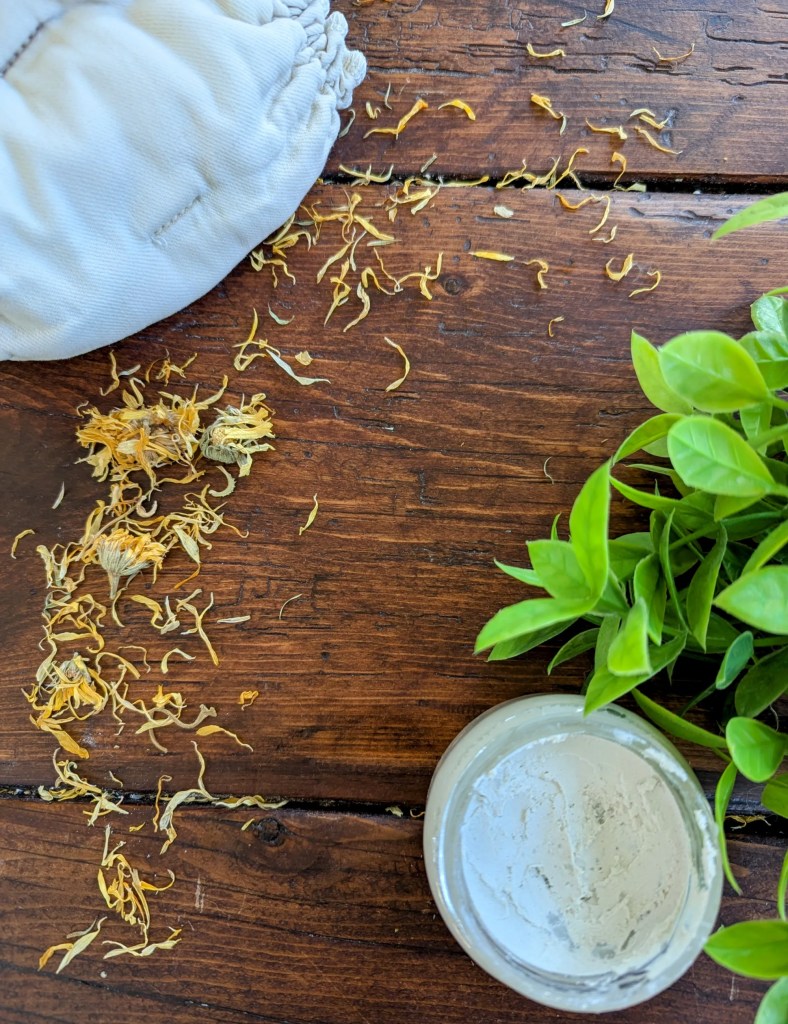
6. calendula oil or cream
Calendula is a flowering plant, commonly known as pot marigold (Calendula officinalis), and is widely used in herbal and natural skincare. Calendula helps heal diaper rash through its gentle, natural healing properties:
- Anti-inflammatory: Calendula helps reduce redness, swelling, and discomfort, thereby calming irritated skin.
- Antimicrobial: It helps prevent or fight infections that can develop in moist diaper areas.
- Wound healing: Calendula promotes faster skin regeneration, aiding in the repair of damaged skin more quickly.
- Soothing and moisturizing: It hydrates and softens the skin, creating a protective barrier against further irritation.
My favorite diaper rash cream is made with calendula flowers, and it’s a saving grace for my son. It went on back order once during a severe flare-up, and we were NOT WELL.
For that reason, I started making my own Diaper Rash Ointment Cream with calendula oil, and it works just as well as anything I’ve ever bought, for a fraction of the cost!
If you’re facing a rash that’s creeping up your baby’s belly or on their inner thighs, Ora’s Amazing Herbal and MJ’s Herbals make calendula creams that can alleviate discomfort outside of the diaper area.
7. beef tallow
Beef Tallow benefits diaper rash by providing a natural, nourishing barrier that protects and heals the skin. It’s rich in fatty acids and vitamins A, D, E, and K, which help moisturize, reduce inflammation, and support skin repair. Its composition is almost identical to human skin oils, making it gentle and effective for soothing irritation and preventing further rash.
8. cod liver oil
Here’s one that’s probably not talked about in the doctor’s office or mommy Facebook groups, but let me tell you, it works.
Fermented cod liver oil like this one can help heal diaper rash by:
- Reducing inflammation thanks to its high vitamin A and D content, which helps calm irritated skin.
- Promoting skin healing by supporting cell regeneration and repair.
- Moisturizing and protecting the skin with its natural fatty acids creates a barrier against moisture and irritants.
- Boosting immune response – the Omega-3s found in cod liver oil support the skin’s natural defenses, which can help prevent infection.
You’re probably wondering, “Is cod liver oil going to make my baby smell like fish?”
Honestly, yes. But she’ll be a baby on the road to recovery, and that’s all that matters.
9. Hypochlorous Acid spray
I’d never heard of hypochlorous acid until we got the results of my son’s gut test (a story for another time). It sounds like a scary chemical that I would never spray on my baby’s bottom, but it’s not as harsh as it sounds.
Hypochlorous acid (HOCl) is a chemical compound that our white blood cells naturally produce as part of the immune response. When your body detects harmful bacteria or viruses, certain white blood cells generate HOCl to kill these invaders safely and quickly.
So, HOCl spray mimics what white blood cells do by delivering this natural, powerful antimicrobial agent directly to wounds or irritated skin to help disinfect and promote healing—kind of like giving your immune system a helpful boost from the outside.
This natural antimicrobial and anti-inflammatory spray helps heal diaper rash by:
- Killing bacteria and fungi that can cause or worsen infections in the diaper area.
- Reducing inflammation and redness, and soothing irritated skin gently without stinging.
- Promoting faster healing by creating a clean, protected environment for the skin to repair.
- Being safe and non-toxic, so it can be used frequently without damaging delicate baby skin.
This HOCI spray has been a game-changer for my son’s eczema and severe diaper rash. I never leave the house without it, and I’m mildly angry that nobody talks about it.
10. topical probiotic serum
I’m not a scientist, but there’s a lot of chatter these days about how our gut microbiome is linked to our skin microbiome. Thanks to an overuse of antibacterial soaps and disinfectant wipes, most of our microbiomes are knocked out in a way that yogurt can’t fix.
I recently learned that there are topical probiotics you can put directly on the skin, and don’t think I haven’t been doing just that.
A topical probiotic serum can help heal diaper rash by:
- Restoring the natural balance of good bacteria on the skin, which protects against harmful microbes that cause irritation and infection.
- Strengthening the skin’s barrier, making it more resilient to moisture and irritants.
- Reducing inflammation by calming the immune response in irritated skin.
- Promoting faster healing through improved skin health and microbial balance.
I’ve been using this probiotic serum from Roe Wellness and have seen a huge improvement in my son’s overall skin and diaper rash. I apply it to his entire body before bed, but if you’re only dealing with diaper rash, you can put it directly on your baby’s bottom.

11. Diaper free time
The enemy of a rash is moisture. The problem that parents face with diaper rash is that the baby’s bottom is always swaddled in something warm and damp.
A simple way to rectify that is:
- Dry baby’s bottom completely before putting on a new diaper. You can do this by fanning them with your hand or even installing a small portable fan on the changing table.
- Letting them go diaper-free for 10-15 minutes. I know this is a huge challenge because there’s a potential for all manner of bodily fluids to get everywhere, but it’s worth it to let fresh air reach your baby’s bottom. Spread out a few towels and be OK with a little mess.
12. Natural barrier cream (like zinc oxide)
Did I mention earlier that the most fantastic diaper cream on planet earth contains calendula flowers and zinc oxide?
There are plenty of decent diaper creams out there that can prevent diaper rash, but I’ve only found one that actually heals it.
Here’s how it works:
- Creates a protective barrier on the skin that shields it from moisture, urine, and stool, which are major irritants.
- Soothes and calms inflammation, reducing redness and discomfort.
- Promotes skin healing by protecting damaged skin and allowing it to repair.
- Has mild antimicrobial properties, helping prevent infection.
We also have a recipe for Diaper Rash Cream Ointment that is very similar to Batao, made with zinc oxide and calendula oil, works just as well, and is a fraction of the cost. Check it out!

13. Manuka honey
I once read that manuka honey is as powerful as an antibiotic without the gut-harming side effects. I’m an optimist when it comes to natural remedies, but this one is the real deal. I’ve used it on everything from major wounds on my dog to strep throat.
Turns out you can use it on diaper rash too!
Manuka honey can heal diaper rash by:
- Its strong antibacterial properties, which help prevent and fight infections in irritated skin.
- Reducing inflammation and soothing redness, calming discomfort.
- Promoting skin repair and regeneration thanks to its natural enzymes and antioxidants.
- Keeping the skin moist yet protected, creating an optimal environment for healing.
To use manuka honey for diaper rash, apply a thin layer to the affected area and let it set for 20-30 minutes. You can rinse it off with warm water or let it stay until the next diaper change.

14. Aloe vera gel
Aloe vera is another one of those Swiss Army elements of natural remedies. It’s beneficial for a wide range of ailments, including constipation, wound care, and rashes.
Pure aloe vera can heal diaper rash by:
- Soothing and cooling irritated skin, reducing redness and discomfort.
- Reducing inflammation thanks to its natural anti-inflammatory compounds.
- Moisturizing dry, damaged skin to promote faster healing.
- Supporting skin regeneration with vitamins and antioxidants that help repair tissue.
- Creating a protective barrier that shields skin from further irritation.
To use: apply a thin layer of aloe vera to the baby’s bottom and let it dry completely before adding the barrier cream.
Protocol for severe diaper rash
If you’re brain is scrambled by chasing down home remedies, I might have just made it worse. Please don’t worry! You don’t need to do all of these things to heal your baby’s rash.
Here’s a daily protocol that works for our family:
Diaper change #1
For the morning diaper change, remove stool with an unscented baby wipe (if necessary) and gently wipe the baby’s bottom with a solution of baking soda and water. Spray baby’s bottom with HOCI spray. Let the area dry completely, then add a thin layer of fermented cod liver oil. Apply a layer of zinc oxide barrier cream (diaper cream) and put on a fresh, fragrance-free diaper.
Subsequent midmorning diaper changes
For the next couple of diaper changes, remove stool with an unscented baby wipe (if necessary), then wipe baby’s bottom with baking soda water. Let the area dry and add a layer of natural diaper cream.
Midday diaper change
For the midday diaper change (think before naptime), remove stool with an unscented baby wipe (if necessary) and spray the baby’s bottom with HOCI spray. Allow the area to dry completely and then apply a layer of natural diaper cream. If your baby is raw around her inner thighs, apply a layer of beef tallow or calendula cream.
Subsequent Afternoon diaper changes
For the remaining diaper changes before bedtime, remove stool with an unscented baby wipe, then wipe the baby’s bottom with baking soda water. Apply a layer of natural diaper cream and put on a fresh diaper.
Final diaper change (bedtime)
For the last diaper change of the day, remove stool with an unscented baby wipe and spray baby’s bottom with HOCI spray. Allow the area to dry completely and then apply a thin layer of probiotic cream. Follow this with a layer of natural diaper cream and put on a fresh diaper.
Middle of the night diaper changes
If you’re up at night for feedings, your baby might need a fresh diaper. Make it easy on yourself by only wiping the baby if stool is present, and then apply a layer of natural diaper cream and a fresh diaper.
You can Heal your baby’s rash naturally
I hope you read the above protocol and thought, “Ok, I can do this. Healing is possible,” and not “Oh my gosh. That’s going to take forever. I can’t do it.”
Will it take extra time on the changing table? Yes, and your baby won’t thank you for it right now. They might even scream and thrash like a baby cougar, but I promise it will be worth it when you see the rash clear up.
What Worsens diaper rash
When healing diaper rash, it’s essential to avoid products that can irritate or delay the healing process. These include:
- Fragranced wipes or creams – Can cause stinging and irritation on broken or sensitive skin. When using wipes, make sure they are fragrance-free and without parabens and phthalates (like these).
- Alcohol-based products – Dry out and sting the skin, worsening discomfort.
- Talc-based baby powders – Can irritate the lungs if inhaled and worsen rashes.
- Harsh soaps or bubble baths – Strip natural oils and may cause further irritation.
- Petroleum-only products (if infection is present) – Trap moisture and bacteria if used without addressing an infection.
- Cornstarch – May worsen rashes caused by yeast (candida), as it can feed the fungus.
FAQs
What diaper rash cream is best?
In case I didn’t say it enough already, Botao is the best product I have found for healing diaper rash. We also have a recipe for Diaper Rash Ointment Cream with Calendula Oil that is remarkably similar to Botao. It’s easy to make, works just as well, and costs a fraction of the price!
That being said, every baby is different, so keep searching until you find what works for you.
Are diaper rashes itchy?
If my son’s frantic itching is any indication, YES, it’s incredibly itchy.
Are Diaper rashes painful?
Yes. Yes. Yes. Yes. Yes.
Can diaper rash spread?
Yes, it can spread. I’ve seen diaper rash spread all the way up to my son’s neck and down his legs. That’s a good indication that you’re dealing with a severe bacterial infection, not a rash. If you’re in the same boat, this HOCI spray will be your new best friend.
Can diaper rash cause blisters?
Yes, diaper rash can cause blisters—especially if the rash becomes severe or is left untreated.
It’s going to get better
There are days when diaper rash can feel life-consuming. You might dread changing your baby’s diaper and feel overwhelmed by all the products sitting by the changing table.
I’m right there with you.
It’s important to remember that it’s going to get better. It is. Our bodies were designed to heal. Our babies won’t be in diapers forever. It’s going to be ok.
I’d love to hear about what works for you and your baby in the comments!