This post contains affiliate links. Please read our disclosure policy.
If you love sourdough but want something a little softer and slightly sweet, this honey sourdough bread with milk is perfect for you! It’s tender, fluffy, and enriched just enough to make it ideal for toast or sandwiches without being too rich or complicated!
New to sourdough? Check out our How to Make Sourdough Starter Guide!
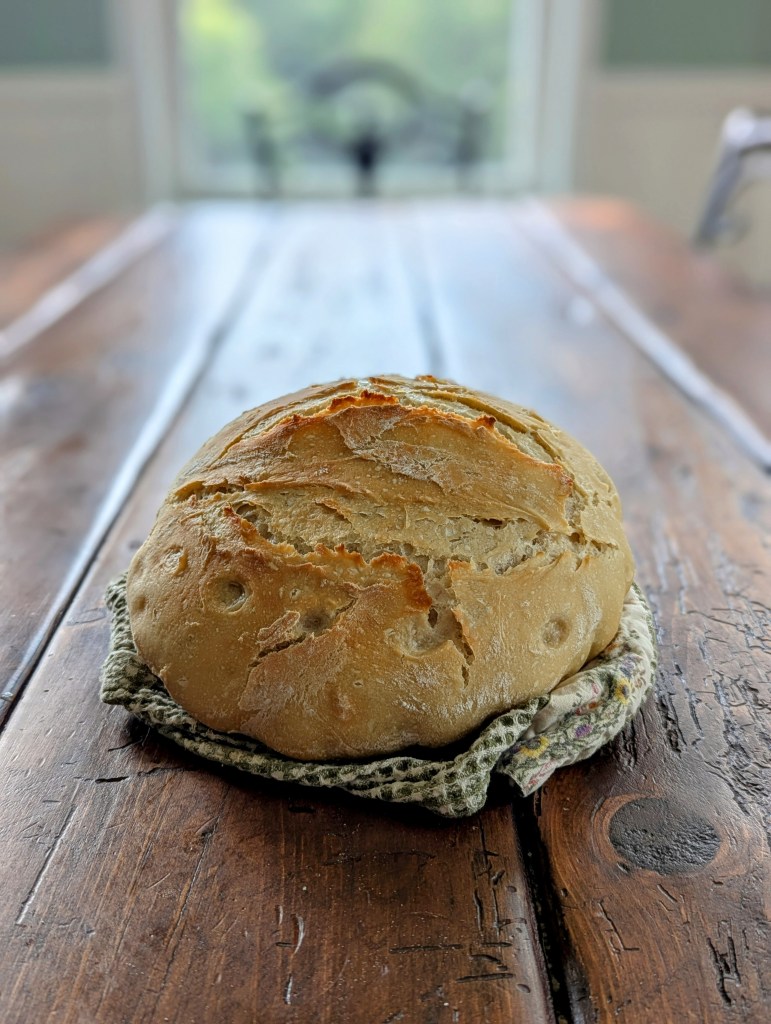
Table of Contents
Sourdough bread is one of those magnificent gifts that brings everyone together, no matter the time of day or circumstance. It fills your home with a scent that makes you think, “Everything is going to be ok,” no matter how stressed you are. Couple that with copious amounts of butter, and you’re on your way to a delicious,” no matter how stressed you are, ” meal or snack.
This milk and honey sourdough bread is a recipe I reach for over and over for two reasons:
- It’s foolproof. Bread can be finicky. Despite your best efforts, it can be bland, too crusty, have no texture at all, or fall flat. This isn’t one of those recipes. It’s not fussy, only has five ingredients, and turns out perfect every time.
- It reminds me of Winnie-the-Pooh. Bear with me. Do you remember that scene in the old Winnie-the-Pooh movie when Pooh eats too much and gets stuck in the entrance to Rabbit’s house? Poor Pooh was stuck there night after night while Rabbit grew grumpier and grumpier looking at his giant behind. But to be fair, Rabbit offered Pooh the milk and honey that made him too chunky to leave. When I think of milk and honey, I think of this scene in Winnie-the-Pooh, and now you probably will too.
Whether you’re a Winnie-the-Pooh connoisseur like me or not, you’re going to love this recipe and reach for it again and again.
Why you’ll love this Soft Honey Sourdough Bread with Milk
It’s super easy and perfect for beginners. Bread doesn’t have to be fussy. If you’re a mom, working professional, or someone who doesn’t have a lot of time for baking but wants a delicious loaf of bread, this recipe for honey sourdough bread with milk is for you.
It has only five ingredients!
Soft and chewy on the inside, with a crusty exterior. This is the kind of bread that, when you open it up, makes you want to take a nap on the soft, steamy inside.
Perfectly soft and sweet. The combination of milk and honey balances the tangy sourdough starter and makes the bread deliciously soft.
Versatile. This sourdough recipe is an excellent base for numerous variations. Try adding fresh or dried herbs, dried fruit, or a dash of cinnamon to mix things up.
Key Ingredients
Sourdough Starter: Bubbly and active for the best rise.
Whole Milk: Adds fat and moisture to soften the loaf and give it a golden hue.
Honey: Adds decadent flavor, sweetness, and promotes browning.
Flour: I like this one.
Salt: Balances sweetness and strengthens structure.
Tools you may need
One of my favorite things about bread is that you don’t need anything fancy to make it. People have been making bread since the dawn of time, using just their hands and a heatproof bowl. If that’s all you have, perfect!
A few helpful tools are:
Proofing basket or a medium-sized bowl lined with parchment paper.
Dutch oven. A Dutch oven with a lid helps create a nice crust on the bread. If you don’t have a Dutch oven, you can bake the bread in any oven-safe bowl or pan and place a bowl of water alongside it in the oven.
Large and medium mixing bowls (if not using a stand mixer or proofing basket)
How to make Honey Sourdough Bread with Milk
Step 1: In a large bowl or the bowl of a stand mixer, combine room-temperature milk, honey, and active sourdough starter. The mixture should be smooth and milky.
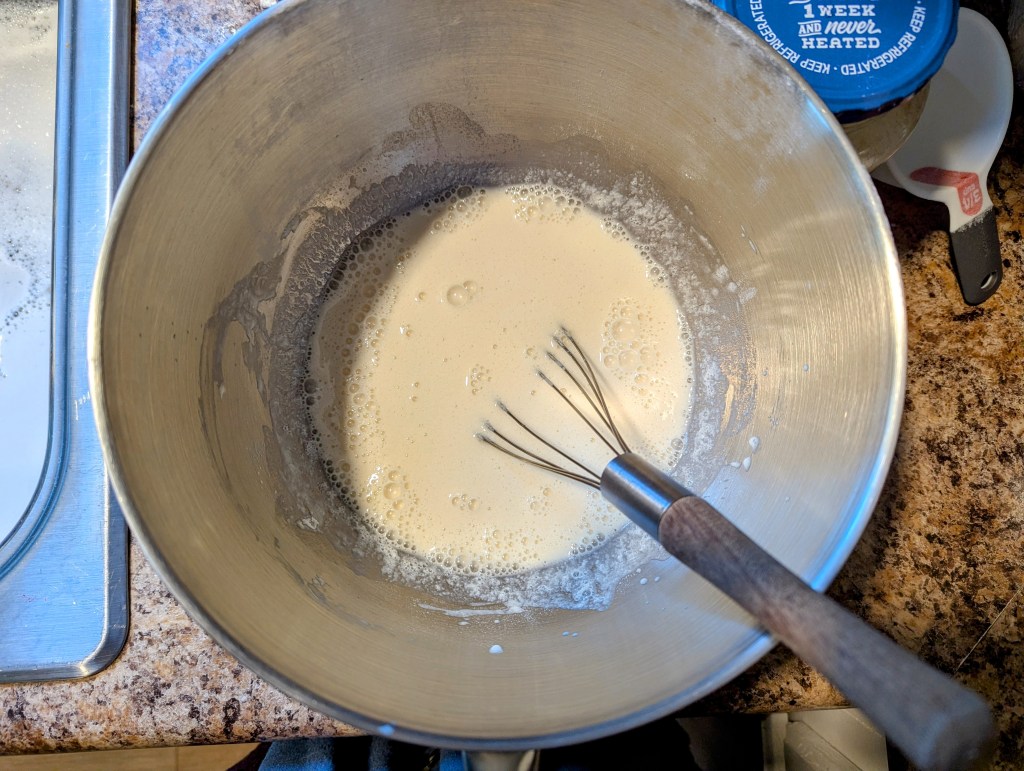
Step 2: Add flour and salt.
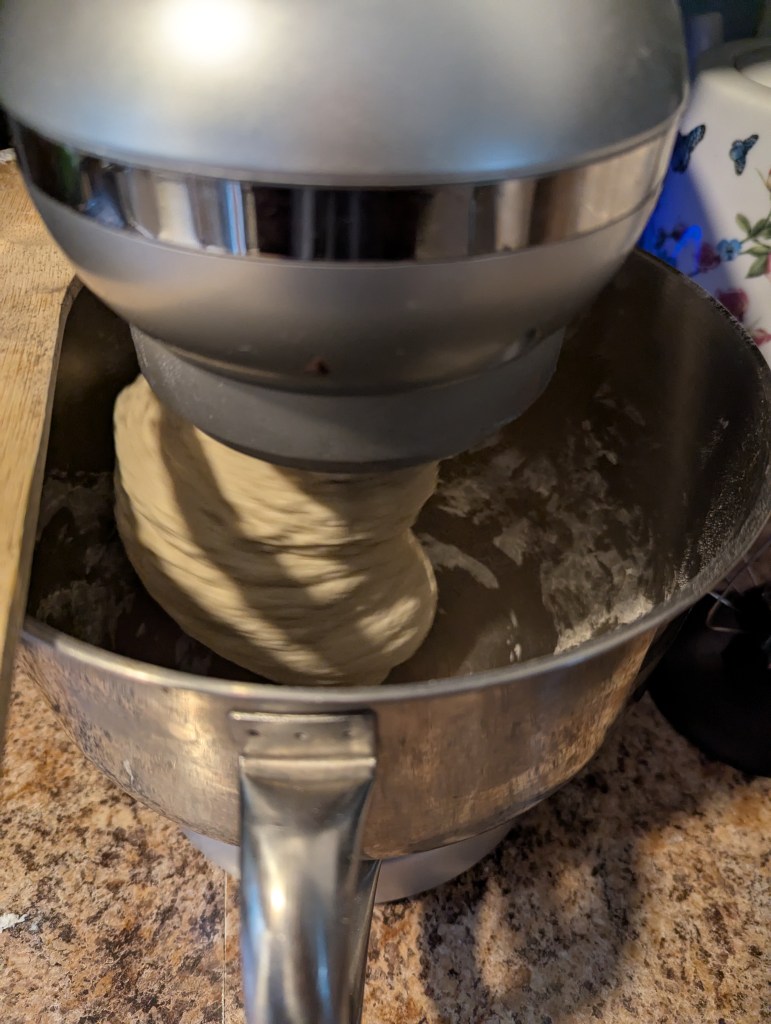
Step 3: If using a stand mixer: mix all ingredients on low for about five minutes, until the dough pulls away from the sides of the bowl. If mixing by hand: Mix all ingredients using a wooden spoon or dough whisk until a shaggy dough forms. Turn the dough out onto a floured surface and knead for 8-10 minutes. The dough should be smooth and elastic, and it should pass the window pane test.
Step 4: Bulk ferment: Transfer the dough to a large, greased bowl and cover with plastic wrap or a damp dish towel. Place the bowl in a warm area to rise for 8-12 hours, until it has doubled in size.
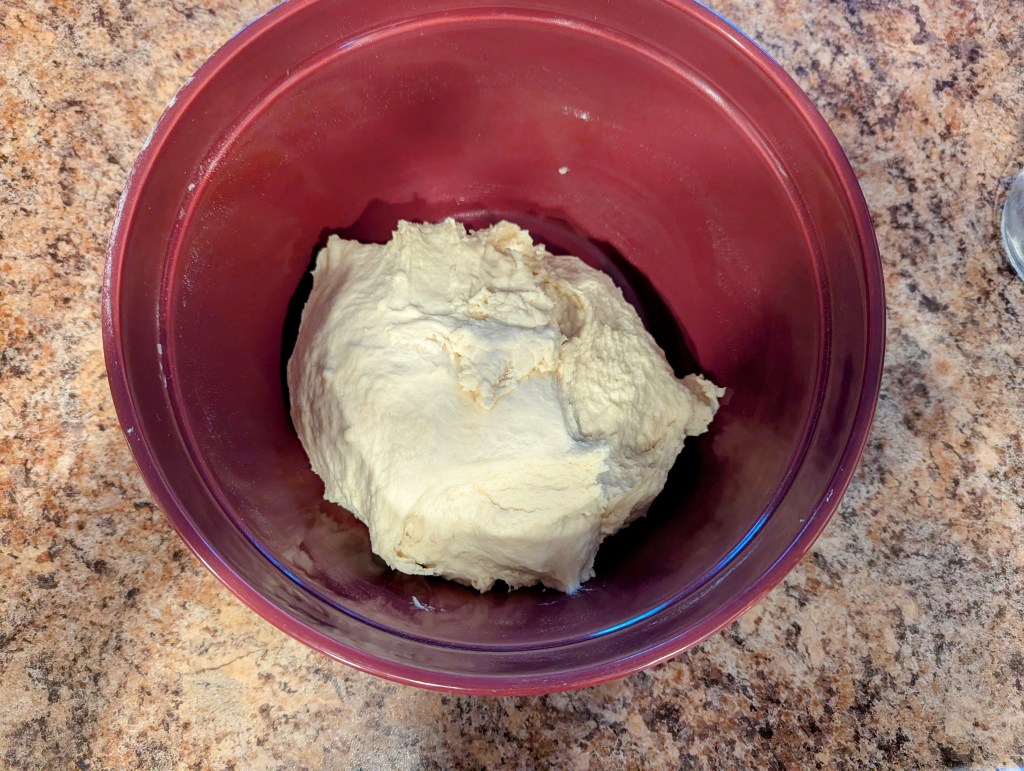
Step 5: When your dough has doubled in size, punch it down and turn it out onto a lightly floured surface.
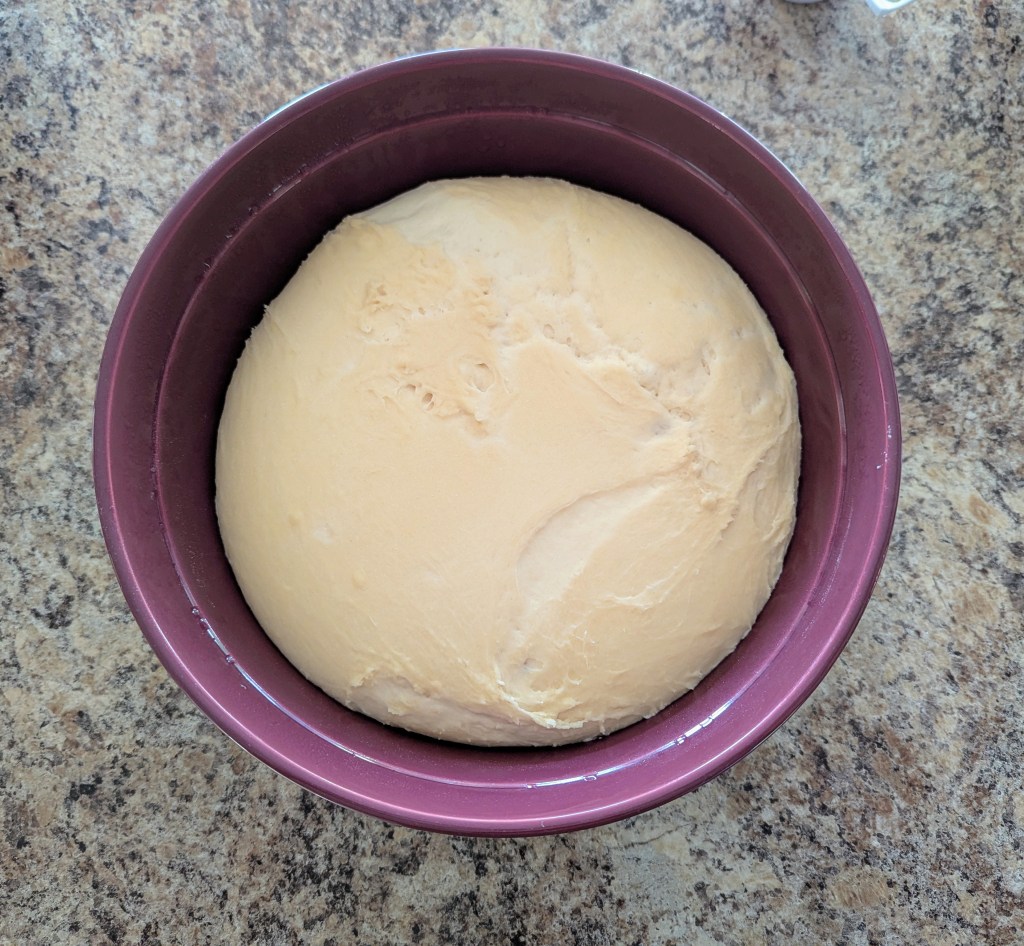
Step 6: Shape the dough by turning the corners in toward the center and smoothing it into a round loaf.
Step 7: Second rise: Transfer the loaf to a proofing basket or a medium bowl lined with parchment paper. Allow it to rise for 1-2 hours until it has doubled in size.

Step 8: Preheat the oven to 500°F.
Step 9: When the dough has doubled in size, transfer it to a Dutch oven lined with parchment paper, cover it, and place it in the oven. Bake for 10 minutes.
Step 10: Reduce the oven temperature to 400°F and continue baking for an additional 25 minutes.
Step 11: Uncover and continue baking for 10-15 minutes.
Step 12: Remove the bread from the oven and allow it to cool for 1-2 hours before slicing (the hardest part!).
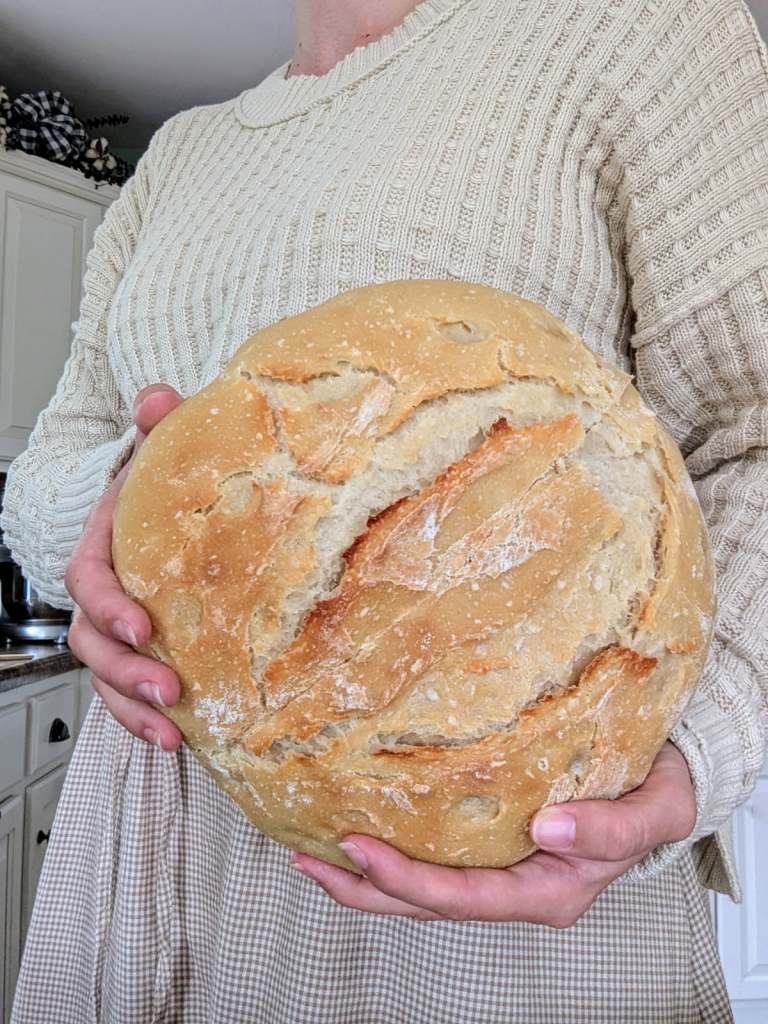
Step 13: Enjoy!
FAQs
how should i store sourdough bread?
Store sourdough bread at room temperature in a paper bag, linen bread bag, or cut-side down on a wooden board for up to 3 days.
Can sourdough bread be frozen?
Yes! Simply slice and freeze it in an airtight bag—toast slices straight from frozen when needed.
Is sourdough bread healthier?
Yes, sourdough bread is considered healthier than regular yeast bread because it is easier to digest, allows for better mineral absorption, and has a lower glycemic index due to its long fermentation process.
Why doesn’t my sourdough bread rise?
Bread is finicky about temperature. If you are sure your starter is active and bubbly, it could be an issue with your environment. Try placing your bowl or basket of dough on top of a heating pad set to low to allow it to rise.
How do i know if my sourdough starter is active?
An active sourdough starter will have lots of bubbles and will grow up the sides of its container. Before baking, see if it passes the float test! Place a small spoonful of starter in a glass of warm water and see if it floats. If it does, you’re ready to bake! If not, it needs to be fed or given a few more hours to mature.
Trouble Shooting
Dense, gummy crumb. This is often caused by under-proofing or using a weak, underdeveloped sourdough starter. Next time, ensure your starter is active and bubbly and passes the float test. Then, give it enough time to double in size during the second rise.
Flat or Spreading Loaf. This could be caused by weak gluten development or issues with shaping. Next time, knead your dough until it passes the window pane test. If necessary, allow the dough to rest for 10-20 minutes and continue kneading. If this isn’t the issue, work on your shaping technique. Use a smaller bowl or basket to proof your dough during the second rise.
Bread doesn’t rise. If your sourdough bread loaf doesn’t rise, it could be because your starter isn’t active enough or your home is too cool. Try placing your bread on top of a heating pad set to a low temperature.
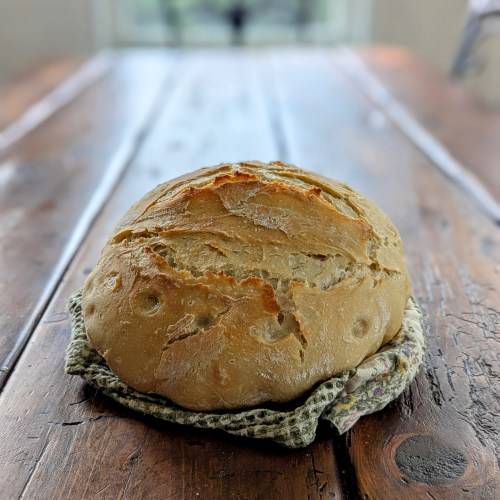
Milk and Honey Sourdough Bread
Equipment
- 1 stand mixer with dough hook or
- 1 large mixing bowl
- Food scale
- 1 Dutch oven
- 1 proofing basket or
- 1 medium-sized bowl (for second rise)
Ingredients
- 350 grams room temperature milk
- 600 grams flour
- 30 grams honey
- 15 grams salt
- 200 grams sourdough starter, active and bubbly
- Olive oil or avocado oil for greasing
Instructions
- In a large bowl, combine room temperature milk, sourdough starter, and honey.
- Add flour and salt.
- If using a stand mixer, mix the dough for 5 minutes on low speed until the dough pulls away from the sides of the bowl (see note). If kneading by hand, knead for 8-10 minutes until the dough passes the window pane test (see note). Dough should be smooth and easily stretchable.
- Transfer your dough to a large, greased bowl and cover it with plastic wrap or a damp dish towel.
- Bulk ferment. Allow the dough to rise for 8 to 12 hours, or until it has doubled in size (see note).
- When the dough has doubled in size, punch it down and turn it out onto a clean, lightly floured surface.
- Shape the dough by turning the corners inward and smoothing into a uniform circle.
- Place the shaped loaf, seam-side down, into a proofing basket or a medium-sized bowl lined with parchment paper.
- Second rise. Allow the dough to rise for 1 to 2 hours, until it has doubled in size.
- Preheat oven to 500°F.
- After the dough has doubled in size, place it in a covered Dutch oven and bake for 10 minutes.
- Reduce the oven temperature to 400°F and bake for 25 minutes.
- Uncover the Dutch oven and continue baking for an additional 10-15 minutes.
- Remove the bread from the oven and allow it to cool for 1-2 hours before slicing.
Notes
Sourdough didn’t turn out Quite Right? Check out:
- Why didn’t My Sourdough Bread Rise?
- Why is My Sourdough Bread Gummy
- Why is My Sourdough Starter Not Rising?
- Why is My Sourdough So Sticky? (And How to Fix it!)
- Why is My Sourdough Starter Watery? Causes + Easy Fixes!
You’re Going to Love This Milk and Honey Sourdough Loaf
There’s something incredibly satisfying about baking a loaf of soft, golden sourdough bread that you know will be just as perfect for breakfast as it is for a hearty sandwich. This milk and honey variation adds just the right touch of sweetness and tenderness, without losing that classic sourdough character.
Whether you’re new to sourdough or looking to expand your go-to recipes, this enriched loaf is a simple, rewarding bake you’ll want to make again and again. Don’t forget to share your results in the comments— I’d love to see your beautiful loaves!
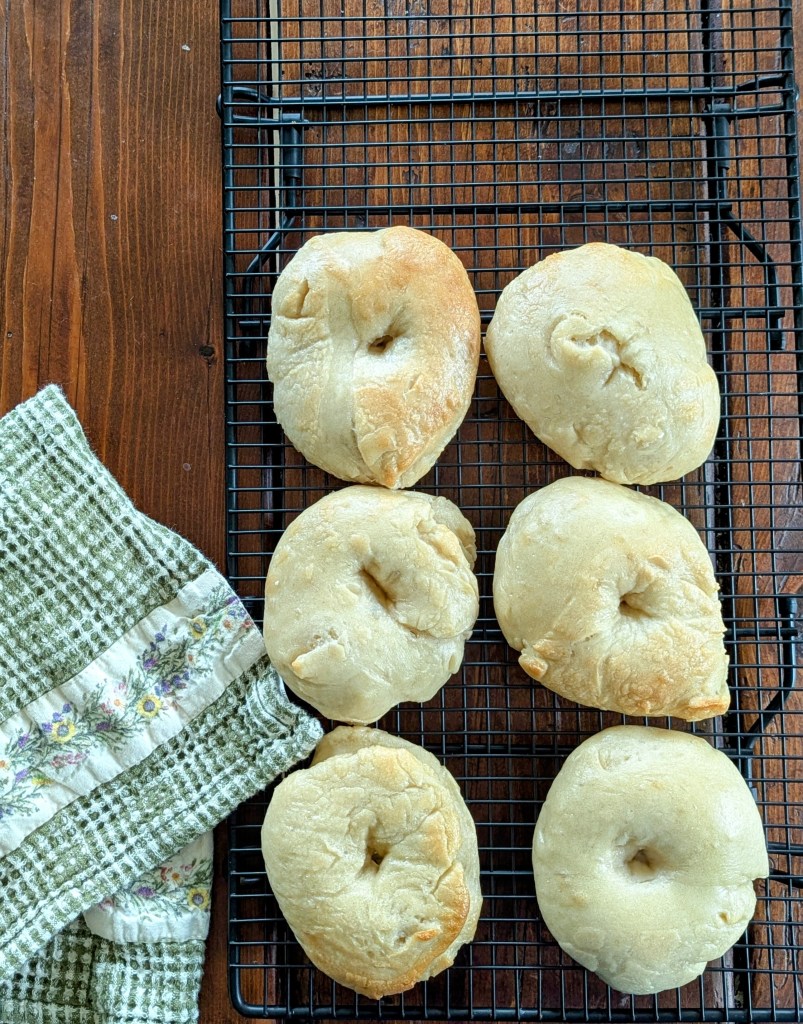



[…] flavored sourdough: Try cinnamon swirl bread or honey sourdough for a sweeter […]
[…] Milk and honey sourdough bread […]
[…] Milk and Honey Sourdough Loaf […]