This post contains affiliate links. Please read our disclosure policy.
If you’re working hard at your sourdough bread, only to get loaf after loaf of dense, flat loaves, you’re probably wondering, “Why is my sourdough not rising?” If so, you’re in the right place! I’m going to walk you through the various pitfalls home bakers face when their sourdough is not rising, and how to fix it.
Table of Contents
We’ve all been there.
We follow the recipe to the T. We knead the dough dutifully or set timers for round after round of stretch-and-folds.
We do everything right.
But what we pull from the oven is not a beautiful, golden loaf with a fluffy open crumb, but a dense, hockey puck that the neighborhood children could knock around with a stick.
What went wrong? Is it us? is it the flour?
Why is my sourdough not rising??
Will our dreams of being the best darn sourdough baker in the family go unrealized?
Not on my watch, friends.
Let me stop you mid-spiral with these words of encouragement: I’ve been right where you are.
I’ve been in seasons where my sourdough would. Not. Rise.
Now I’m here, sharing my very best sourdough recipes with you guys.
And I’ll tell you a little secret… sometimes I still have trouble with my sourdough not rising.
It happens. And it’s no reason to panic. Usually, it can be nailed down to a few simple fixes that I’m going to walk you through below.
Why is My Sourdough Not Rising (And how to Fix it)
Next time you’re pulling at your hair, wondering “Why is my sourdough not rising?” take a deep breath. Take a sip of water.
It’s going to be alright.
Sourdough rise depends on a few key factors working together: a healthy starter, fully developed gluten, a good, long fermentation, and a warm enough environment.
When one of these is off, the dough becomes sluggish or flat.
Stay calm, friends. It’s going to be ok.
Below are the most common reasons your sourdough isn’t rising, and how to gently correct them.
Your Sourdough Starter Is Weak or Inactive
A strong starter is the foundation of a good sourdough rise. If your starter isn’t active enough, the dough simply won’t have the lift it needs, no matter how long you stare at it.
A healthy starter should:
- Double in size within 4–8 hours after feeding
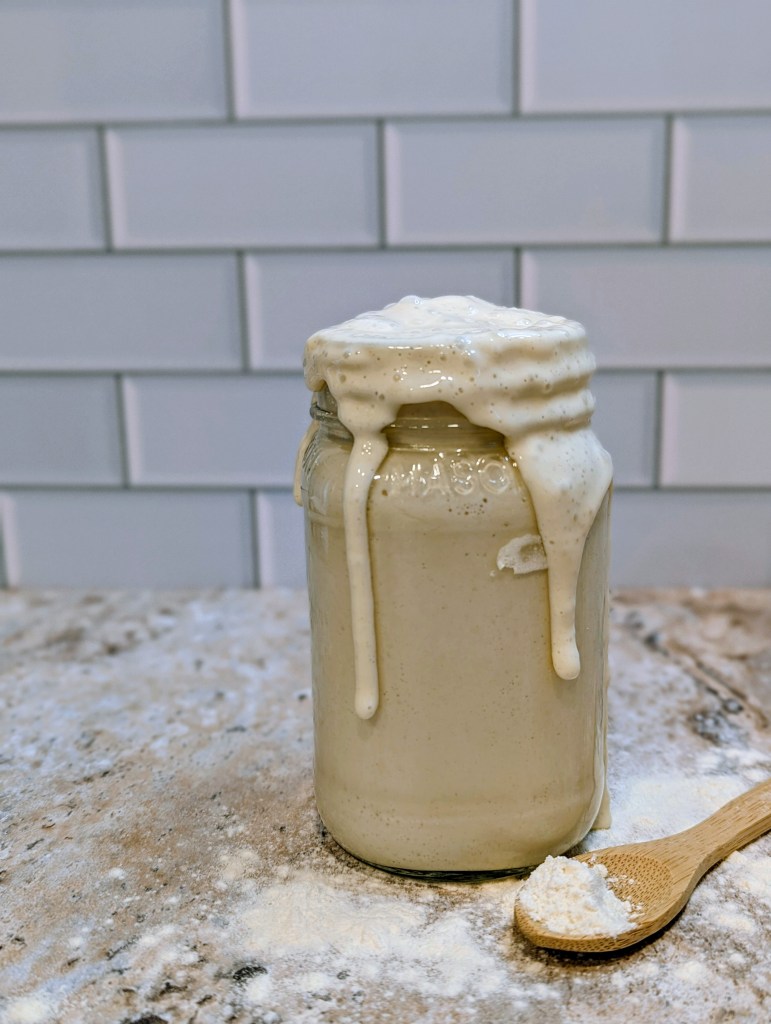
- Look bubbly and airy
- Smell pleasantly tangy, not sharp or overly sour
If your starter isn’t showing these signs, it may need a few days of consistent feeding to rebuild strength. Feeding regularly, using warm water, and keeping it in a warmer spot can make a big difference.
Check out our How to Make Sourdough Starter Guide for full troubleshooting instructions. Chances are, whatever you’re facing with your starter can be diagnosed there.
The Gluten Is Underdeveloped
Gluten is what gives sourdough its structure. Without enough gluten development, the dough can’t trap the gas created during fermentation, even if your starter is active.
Underdeveloped gluten often shows up as:
- Dough that spreads instead of holding shape
- Tearing when stretched (not passing the windowpane test)
- Little to no rise during bulk fermentation
It’s what makes your bread turn out like a lethal weapon instead of the pillowy loaf you envisioned.
It’s frustrating, but 100% fixable through:
- Proper kneading or
- Stretch-and-folds
Stretch-and-fold and kneading help strengthen gluten gently over time. Without them, or without enough of them, your bread won’t evolve past the sad little lump in the bottom of your bowl.

Thankfully, you only have to do one, and your recipe will tell you exactly which one your bread kneads.
Sourdough baguettes and sourdough ciabatta require 3-6 rounds of stretch-and-folds. To perform stretch-and-folds, wet your hands, grab a handful of dough, and pull it straight up 6-12 inches, then lay the stretched dough in the center of the bowl. Turn the bowl a quarter turn, stretch the dough straight up, and fold it over. Repeat this until all four sides of the dough have been stretched.
Then, cover the bowl with plastic or a damp towel and allow the dough to rest for 15-30 minutes, per your recipe’s instructions. Allowing the dough to rest between folds is just as important as the folding itself, so don’t rush it!
Sourdough French bread and sourdough sandwich breads require 5-10 minutes of traditional kneading (by hand or with astand mixer), until the dough is soft and elastic and passes the windowpane test.
Your Home Is Too Cold
Temperature plays a huge role in sourdough fermentation. This is what I thought killed my first few attempts at a sourdough starter.
Turns out, it wasn’t dead, just sluggish and needed a warmer enviroment.
Cold dough ferments slowly, which can make it seem like nothing is happening (because it’s not).
Sourdough typically ferments best around 75°F. If your kitchen is cooler than that, fermentation will take longer (sometimes much longer), and it will struggle to rise (que hockey puck loaf).
A few simple ways to warm your dough if it’s not rising are:
- Place it on top of the refrigerator (if the top of the fridge is warm)
- Place it in the oven with the light on (and a sign on the door to remind you not to turn it on!)
- Wrap the bowl in a towel
- Place it on top of a heating pad set to low (my absolute favorite method)
If a cold environment is your problem, rejoice! This is such an easy fix and will yield results in just a couple of hours.
Your Dough Is Under-Fermented
Here’s another common issue you could be facing if your bread is not rising.
Under-fermented dough hasn’t had enough time to build gas and structure. I’d say this is one of the most common struggles sourdough bakers encounter.
Signs of under-fermentation can look like:
- Dense, tight dough
- Very few visible bubbles
- Minimal increase in volume
Again, after all your hard work mixing, kneading, or doing stretch-and-folds, the last thing you want to see is a dense, bubble-less dough. But fear not, my friends. This is a super simple fix!
Rather than watching the clock (like you do for yeast bread), look for visual cues: bubbles along the sides, a slightly domed top, and a dough that feels lighter and jiggly.
Above all, look for growth. Depending on your recipe, you want your dough to increase its volume by one-third or even double. If you aren’t sure, take a picture of it after you transfer it to the bowl after kneading, so you have something to compare it to.
Your Dough Is Over-Fermented
Ahh, now here’s the opposite of under-fermented dough.
After all of your diligent mixing and kneading, you set the bowl in a warm place and go on about your business, chasing children and refolding the laundry someone tipped onto the floor.
Suddenly, it’s 20 hours later. “Oh, shoot! I was going to make bread!” You scamper to the dough, but it looks sad and deflated, just like you feel. “Why is my sourdough not rising? It’s been hours!”
Yes, but it’s been too many hours.
Over-fermentation happens when the dough rises too long and begins to collapse.
When this happens, the gluten structure weakens and can no longer support the trapped gases.
Signs of over-fermentation can be:
- Dough that looks deflated or soupy
- A strong sour smell
- Dough that tears easily and won’t hold shape
Not to worry. Turn this dough into a flatbread and try again next time. Just be sure to shorten the bulk ferment (and maybe set a timer!) or ferment in a cooler spot in your home.
Hydration Issues (Too Wet or Too Dry)
Hydration affects how dough rises and holds its shape. Very wet dough can rise, but spread out so much that it’s flat, deflated, and difficult to work with. Very dry dough can restrict fermentation altogether.
If your dough feels unmanageable:
- Reduce the water in your recipe slightly if it’s extremely sticky, or add extra flour a tablespoon at a time until it comes together.
- Increase the water in your recipe gradually if the dough feels too stiff.
Small adjustments go a long way with sourdough and can salvage a loaf before it’s too late. You want the dough to be soft and supple, but not so soupy you can’t get your hands around it. It might sound like an exact science, but once you get the hang of what sourdough feels like, you’ll know how to handle hydration issues with no problem.

Salt or Mixing Issues
Every sourdough recipe is different, but they all have three common ingredients: flour, sourdough starter, and salt.
Salt strengthens gluten and controls fermentation (along with enhancing the flavor). Too much salt or adding it improperly can slow down the rise.
Common salt-related issues include:
- Using more salt than the recipe calls for
- Adding salt directly to starter without mixing
Proper mixing also matters. Unevenly mixed dough may ferment inconsistently, leading to your dough not rising.
How Long Should Sourdough Take to Rise?
Honestly, it depends on your recipe. Recipes like sourdough ciabatta come together in just a few hours, but sourdough sandwich bread needs 8-12 hours to ferment fully.
So, all that considered, consult your recipe for the best guide.
That being said, sourdough doesn’t follow a strict timeline. Depending on temperature, starter strength, and hydration, bulk fermentation can take anywhere from 4 to 12 hours.
Rather than aiming for a specific number of hours, focus on:
- Visible bubbles
- A noticeable increase in volume (often 50–75%)
- Dough that feels elastic, lively and workable
When you see these signs, you’re on your way to a freshly baked loaf of perfectly fermented bread.
How to Tell If Your Sourdough Is Actually Rising
The simple answer is you’ll know. Seriously, you will!
Not all sourdough doubles in size, especially higher-hydration doughs. Rise can be subtle, but you’ll still be able to tell.
Look for:
- Small bubbles on the surface and sides
- Dough that jiggles when the bowl is gently shaken
- A smoother, more elastic feel
These are signs that fermentation is happening, even if the rise isn’t dramatic. Be patient and wait for the signs. It’ll be worth it!
Can You Save Sourdough That Didn’t Rise?
A good and valid question. After all your hard work, you don’t want to toss out dough, even if it is weak and sad-looking.
In many cases, you can certainly save your dough. Dough that hasn’t risen enough can often be given more time in a warmer spot. Dough that’s over-fermented may be reshaped or repurposed into flatbreads or focaccia-style bakes.
If all else fails, bake the bread and dry it out for sourdough breadcrumbs or sourdough stuffing. Nobody will know it wasn’t your first plan (and if they figure it out, you can ask them to leave your home).
Frequently Asked Questions
Why is my sourdough not rising overnight?
Your kitchen may be too cold, or your starter may need strengthening. Overnight fermentation often requires warmer temperatures and a little more patience.
Why is My Sourdough Not Rising in the oven?
We refer to this as poor oven spring, and it’s probably something that went wrong during fermentation or hydration.
Can I bake sourdough that didn’t rise?
Yes. The texture may be denser, but it’s usually still edible and flavorful. Bread is bread, after all!
Is my kitchen too cold for sourdough?
If your kitchen is below 70°F, fermentation will be much slower. Warmth helps sourdough thrive, so try popping it onto a heating pad set to low.
You’re on your way to Perfect Sourdough
I hope this guide will help you feel more confident next time you’re scratching your head and wondering, “Why is my sourdough not rising?” It’s frustrating to work so hard on something that doesn’t turn out as you hoped, but after you address a few simple issues, you should be on your way to a perfect loaf every time. Hang in there, friends. Sourdough takes time, but it’s worth it!




[…] Why Is my Sourdough Not Rising? […]
[…] Why is my Sourdough Not Rising? […]
[…] Why is My Sourdough Not Rising? […]
[…] I still run into snags with my ferments! Sometimes it doesn’t rise (the starter and the bread), it gets gummy, or it’s so sticky I can’t shape […]