This post contains affiliate links. Please read our disclosure policy.
If you love rustic sourdough bread and a beautiful open crumb, this sourdough ciabatta is for you! With minimal ingredients and a simple method, you can enjoy the best sourdough ciabatta bread, with a crisp crust and soft interior, for your favorite sandwiches.
New to sourdough? Check out our How to Make Sourdough Starter Guide!

Table of Contents
Sourdough ciabatta, y’all. Sourdough ciabatta.
I’ll let you in on a little secret… I didn’t think this sourdough ciabatta bread was going to be all that good.
I’ve had ciabatta rolls at restaurants and found them to be bulky and unimpressive.
Not so with sourdough ciabatta.
Sourdough just makes everything better. Everything. I’ve yet to come across a bread recipe that wasn’t vastly improved by an active sourdough starter and a nice long ferment.
Such is the case with ciabatta.
After a few rounds of stretch and folds, the dough bubbles beautifully and slices up with the most beautiful open crumb you’ve ever seen. Fill it with your favorite sandwich toppings and suddenly, sandwich night isn’t boring. It’s everyone’s favorite.
All because of a simple sourdough ciabatta recipe.
Let me tell you all about it.
Why You’ll Love Sourdough Ciabatta
- Rustic artisan bread at home – Looks like bakery ciabatta without the fuss! A quick mix and a few stretch-and-folds will give you better bread than anything you’ll find at a store or restaurant.
- Airy, open crumb – Perfectly soft inside with a crisp, golden crust that’s ideal for sandwiches.
- Simple ingredients – Just flour, water, starter, and salt. You can have sourdough ciabatta anytime you like!
- Flexible timing – Bake the same day or ferment overnight for a richer flavor and easier digestion.
- Beginner-friendly – Simple stretch-and-fold method makes handling the wet dough easy.
- Customizable – Add herbs, seeds, or garlic to make it your own! The possibilities are endless.
Ingredients for Sourdough Ciabatta Bread
Like all good sourdough recipes, sourdough ciabatta bread only requires a few ingredients that you probably have on hand, like:
- Sourdough starter: Active and bubbly for the best rise and flavor.
- All-purpose flour or bread flour: Provides structure; You can swap up to half with whole wheat flour.
- Water: Hydrates the dough and brings everything together.
- Salt: Enhances the flavor and strengthens the gluten.
Optional: Olive oil or melted butter for brushing; herbs or seeds for mix-ins.
How to Make Sourdough Ciabatta
Step 1: Mix & Rest. Combine the starter, flour, water, and salt in a large bowl. Mix for 5 minutes until a shaggy dough forms. Transfer the dough to a greased bowl, cover, and let it rest 30 minutes to hydrate the flour.


Step 2: Stretch & Fold. Perform 3 sets of stretch-and-folds, spaced 30 minutes apart, covering the bowl with a damp towel or plastic between sets.
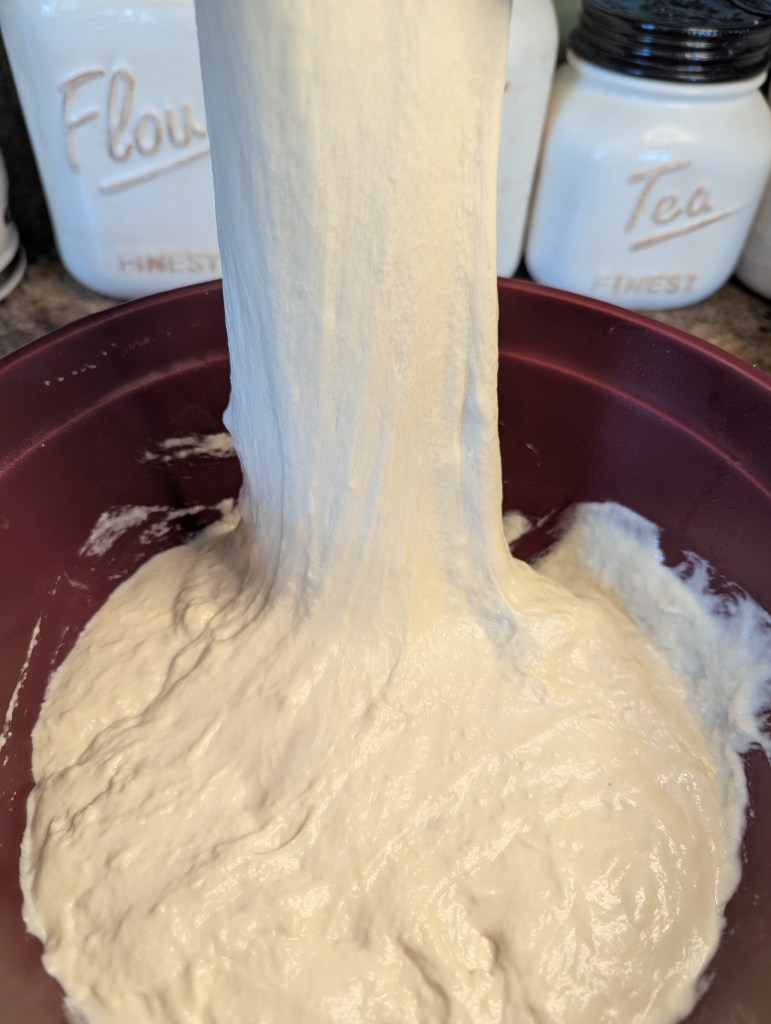
To stretch and fold: Dip your hands in water, lift one side of the dough, stretch it upward, and fold it over the center. Rotate the bowl a quarter turn and repeat until all four sides are folded.
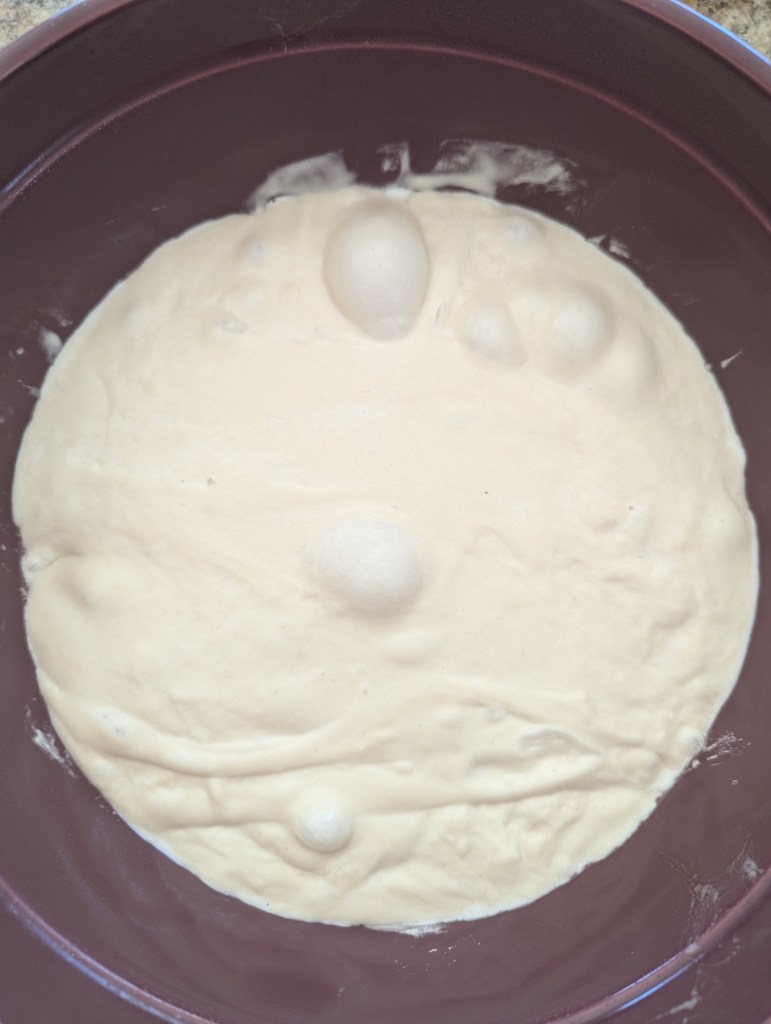
Step 3: Bulk Ferment. Cover and let the dough ferment 4–6 hours, until puffy and bubbly. Overnight option: Cover and refrigerate after bulk fermentation; continue shaping the next day. This deepens the flavor of the dough and makes it easier to digest.
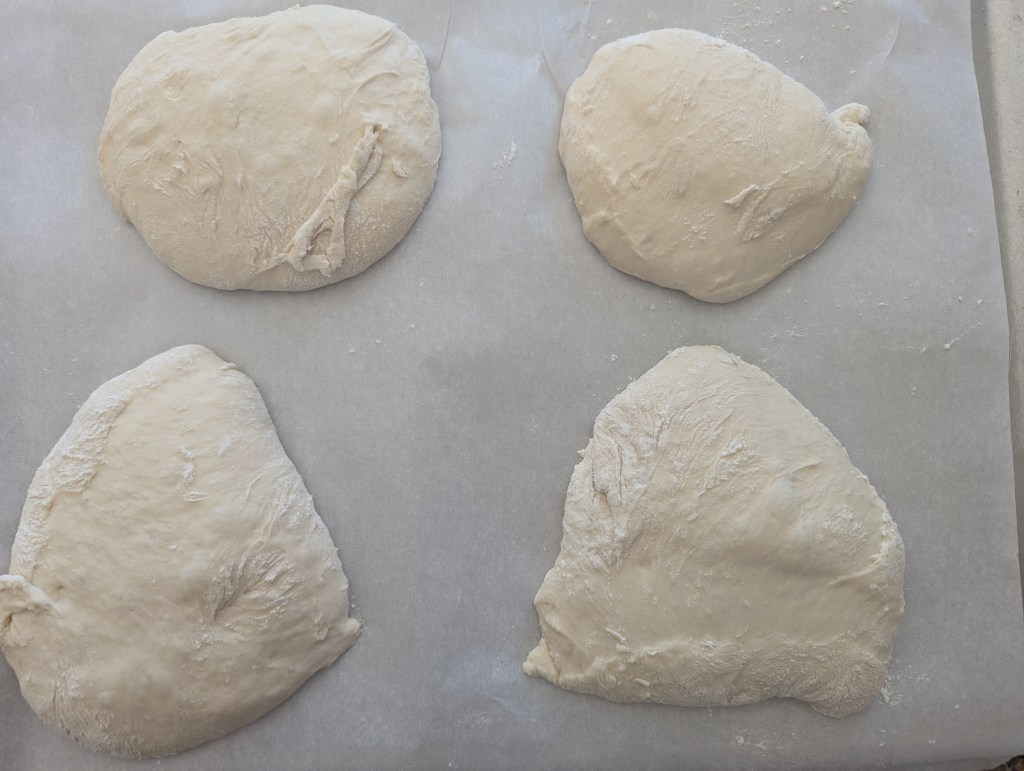
Step 4: Shape & Proof. Turn the dough out onto a floured surface. Gently divide into 6 pieces with a bench scraper, then transfer to a parchment-lined baking sheet. Cover and rest 45 minutes–1 hour.

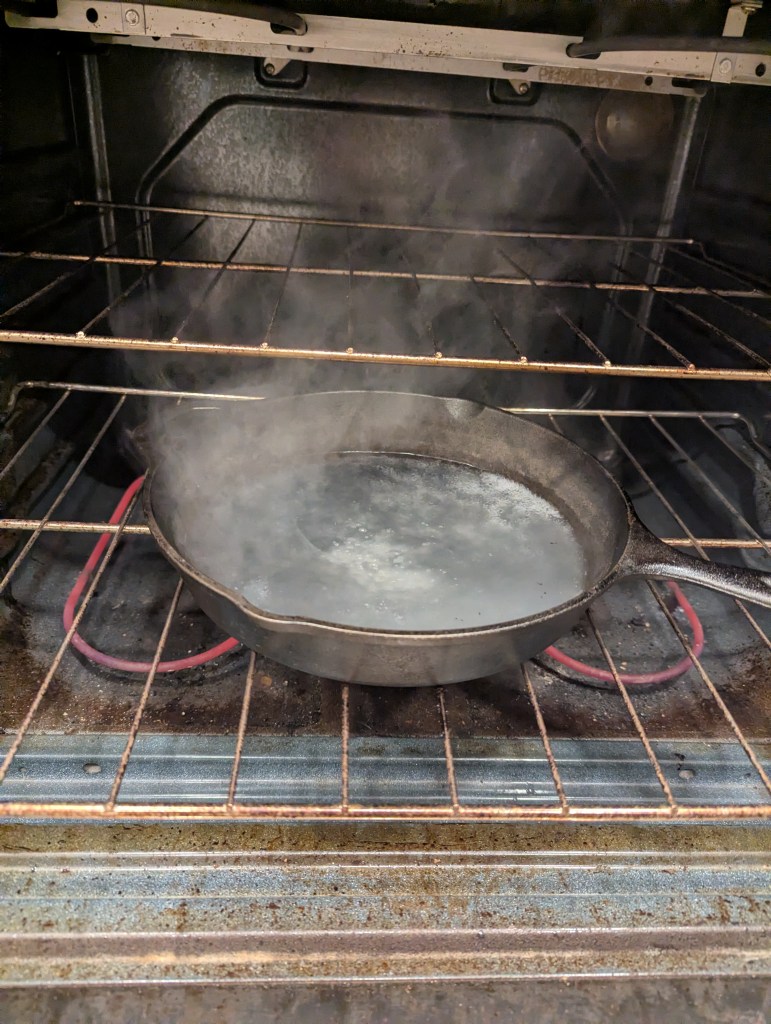
Step 5: Preheat Oven & Steam. Preheat oven to 450°F. Place a cast-iron skillet on the bottom rack. Bring water to a boil.
Step 6: Bake. Pour boiling water into the hot skillet to create steam. Lightly spritz the ciabatta with water and bake 25 minutes, until golden and crisp. Cool on a wire rack before slicing.


Tips for the Best Sourdough Ciabatta
- Wet your hands: Ciabatta dough is stickier than other sourdough recipes. Wetting your hands for the stretch-and-folds will make it easier to handle.
- The dough doesn’t double: Watch for a 50–75% rise and bubbly surface instead of expecting the dough to double in size, like other sourdough recipes.
- Don’t skip the steam: Steam is essential for a crisp crust! Pour water carefully into the preheated pan to avoid burns.
- Be careful with the dough: Gently fold and shape so you don’t deflate the bubbles.
Variations & Add-Ins to try
- Fold in herbs, garlic, or seeds during mixing.
- Brush with olive oil or melted butter before baking for a softer crust.
- Substitute up to half of the flour with whole wheat for deeper flavor.

Serving Suggestions for Sourdough Ciabatta Bread
- Slice and stuff for sandwiches or paninis like our Philly Cheesesteak Recipe
- Serve alongside our healing chicken soup and simple salad
- Toast with butter, olive oil, or jam for breakfast
- Stuff with our meatballs without breadcrumbs and your favorite marinara sauce.
Storage & Leftovers
- Store at room temperature in a bread bag for 1–2 days.
- Freeze baked loaves for up to 1 month. Reheat in the oven to restore crispness.
FAQs about Sourdough Ciabatta
Can I use different types of flour?
Yes! Bread flour will give it more structure; whole wheat adds flavor. Avoid replacing too much, or the crumb may be dense.
Why is my crumb too dense?
You probably under-fermented or shaped the dough too aggressively. Make sure the dough is bubbly after bulk fermentation.
Why isn’t my crust crisp?
Make sure steam is added at the start and bake until the top is golden. Spritzing water also helps.
Can I skip the overnight Ferment?
You can, but overnight enhances the flavor and makes shaping easier.

Sourdough Ciabatta (Easy Rustic Recipe)
Ingredients
- 250 grams sourdough starter, active and bubbly (1 generous cup)
- 450 grams warm water (1 cup + ¾ cup + 2 Tbsp)
- 15 grams salt (1 tbs)
- 615 grams flour (5 cups + 2 tbs)
Instructions
- Mix the dough: In a large bowl, combine the flour, sourdough starter, water, and salt. Mix for about 5 minutes, until a shaggy dough forms. Transfer the dough to a greased bowl, cover, and let the dough rest for 30 minutes to fully hydrate the flour.
- Stretch and fold: Perform 3 sets of stretch and folds, spaced 30 minutes apart, covering the bowl with a damp towel or plastic between each set.To stretch and fold: Dip your hands in water, lift one side of the dough, stretch it upward, and fold it over the center. Rotate the bowl a quarter turn and repeat until all four sides are folded.
- Bulk Ferment: After the final fold, cover the bowl and allow the dough to bulk ferment for 4–6 hours, until it has risen about 50–75% and looks puffy and bubbly on the surface.Overnight option: After the bulk ferment, transfer the covered bowl to the refrigerator and let it ferment overnight. The next day, continue with shaping straight from the fridge.
- Shape dough: Turn the dough out onto a well-floured surface. Gently divide it into 6 pieces, taking care not to deflate the dough. Transfer the pieces to a parchment-lined baking sheet. Cover and let rest for 45 minutes to 1 hour.
- Prepare oven: Preheat the oven to 450°F. Place a cast-iron skillet on the bottom rack while the oven preheats. Bring a kettle of water to a boil.
- Prepare bread: Just before baking, carefully pour the boiling water into the hot cast-iron skillet to create steam. Lightly spritz the ciabatta with water, then place the baking sheet in the oven.
- Bake: Bake for 25 minutes, until the ciabatta is golden brown with a crisp crust. Transfer to a wire rack and allow to cool before slicing.
Sourdough Ciabatta Didn’t Turn out Quite Right? Try:
Why is My Sourdough Not Rising?
Why is My Sourdough Bread Gummy? (And How to Fix it)
Why is My Sourdough Starter Not Rising?
Why is My Sourdough So Sticky? (And How to Fix it!)
Sourdough Ciabatta will be a Family Favorite
This sourdough ciabatta exceeded my expectations, and it will do the same for you and your family. It’s surprisingly easy to make, has a beautiful open crumb, and transforms ordinary sandwiches into something really special. Add this to your weekly baking rhythm, and watch the happy smiles spread around your table. Happy baking!


[…] baguettes and sourdough ciabatta require 3-6 rounds of stretch-and-folds. To perform stretch-and-folds, wet your hands, grab a […]
[…] made with thinly sliced steak, sautéed peppers and onions, and melty provolone tucked into toasted sourdough ciabatta. It’s comforting, simple, and perfect for an easy weeknight […]
[…] Sourdough ciabatta […]
[…] Sourdough Ciabatta (Easy, Rustic Recipe) […]
[…] Sourdough Ciabatta (Easy, Rustic Recipe) […]