This post contains affiliate links. Please read our disclosure policy.
Wondering “Why is my sourdough so sticky?” You’re in the right place! Below, we’ll troubleshoot your sticky sourdough, determine if it’s the right kind of sticky, and what to do if it’s not.
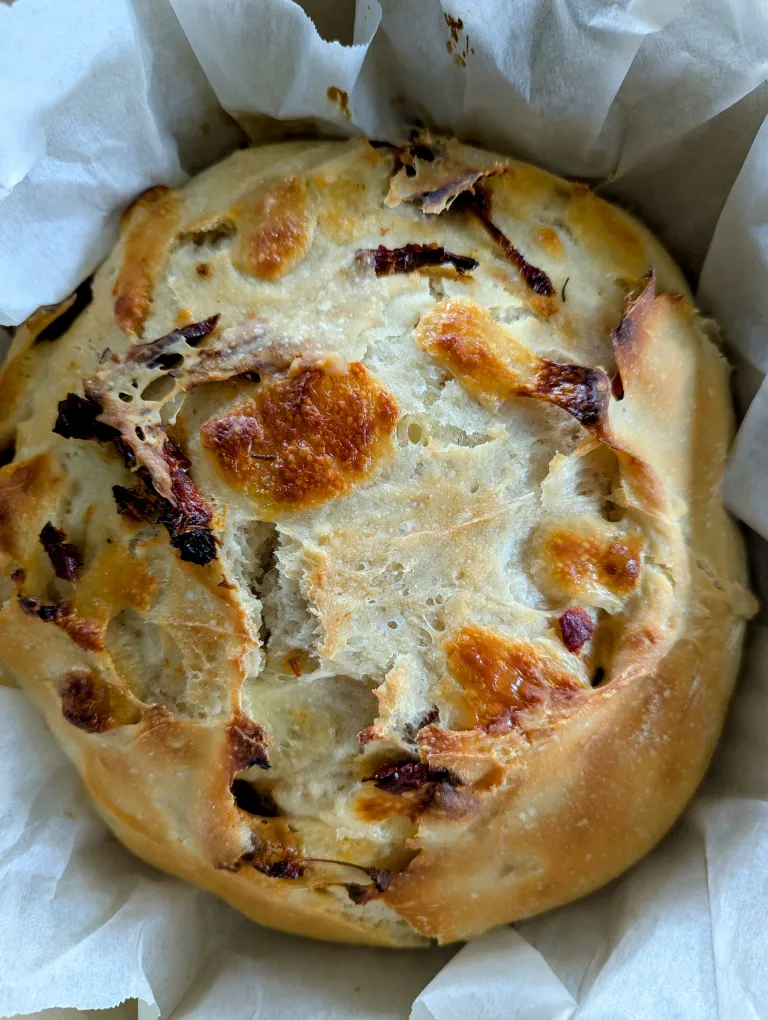
Table of Contents
When people first get into sourdough, they’re eager. Nervous. Excited. Intimidated.
So many feelings as they diligently feed their precious sourdough starters, eager to try the float test and bake bread.
Then they get to the baking phase, and they come to a quick realization: sourdough is different.
It’s different from yeast bread.
The hydration is different. The methods are different. The dough is different.
That doesn’t mean sourdough is more difficult than yeast bread, it just takes a few adjustments.
If you’re scratching your head, wondering “why is my sourdough so sticky?” I invite you to take a deep breath. In and out. It’s going to be ok. In fact, it’s going to be better than ok, because soon you’re going to have bread. And there’s nothing better than bread.
Is Sourdough Supposed to Be Sticky?
Before you comb through the troubleshooting tips, let me say this: sourdough is stickier than your typical yeast bread because it has a higher hydration (water content). You can thank the sourdough starter for that, and I mean really thank it, because that’s what gives you the soft crumb and beautiful air pockets your heart is dreaming of.
If you aren’t sure if your dough is the appropriate amount of sticky, consider this…
A properly mixed sourdough should feel:
- Soft and elastic
- Slightly tacky to the touch
- Stretchy rather than stiff (think windowpane test)
It might lightly stick to your hands, but it should still:
- Pull away from the bowl cleanly
- Hold its shape (at least somewhat) when you turn it out/shape
- Become easier to handle as the gluten develops
If your dough feels:
- Wet and glue-like
- Impossible to shape
- Constantly sticking to your hands/tools/countertop no matter what you do
Then you’re likely dealing with one of the issues below (which is ok, because I’m going to help you fix it!).
The key is learning the difference between normal sourdough stickiness and “Why is my sourdough so sticky?” meltdowns.
Why is my sourdough so sticky?
1. Too Much Water (High Hydration)
This is the most common reason sourdough turns out overly sticky, and it’s entirely fixable (really, it is!)
Before you toss out your recipe as “no good,” or label yourself as “bad at sourdough,” let me give you this reassurance: there are a lot of factors that go into sourdough, such as:
- Flour. All flours are not created equal. They have different protein contents and absorb water differently.
- Measurements. I include measurements in grams and cups in all my sourdough recipes, but I really encourage readers to weigh ingredients in grams using a scale. Why? Because you might measure a cup of flour differently than I do, but the scales don’t lie. 100 grams of flour is 100 grams of flour for me and for you.
Now that we have that out of the way…
Sourdough recipes often use higher hydration to create a soft, airy crumb, but if the hydration is too high for your flour, the dough can become loose and difficult to handle.
Different flours absorb water differently, so even if you’re following a recipe exactly, your dough might still end up wetter than intended.
Signs: you added too much water
- Dough spreads out instead of holding shape
- Feels very wet or slippery
- Sticks heavily to hands and surfaces
How to fix it:
- Start with less water and add more gradually as needed
- Use a stronger flour (like bread flour) that can absorb more liquid
2. Overfermented Dough
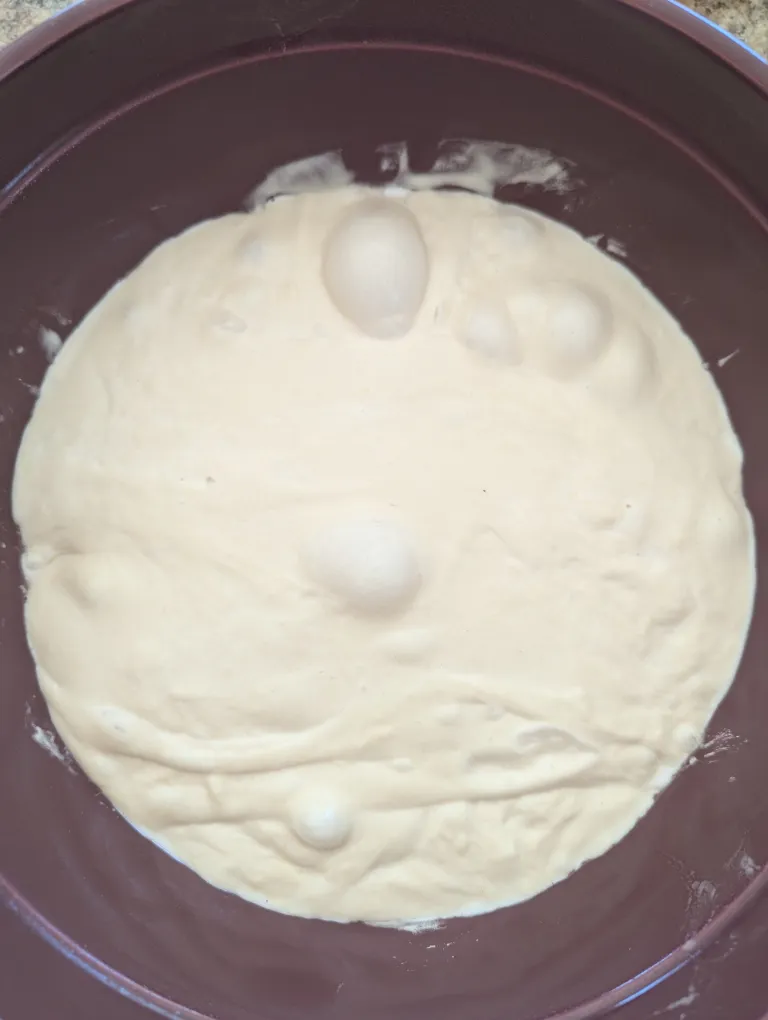
Overfermented dough is another factor that can leave you wondering, “Why is my sourdough so sticky?”
When sourdough ferments for too long, the gluten structure starts to break down. This causes the dough to become slack, sticky, and hard to shape.
This usually happens when you let bulk fermentation go too long or when your kitchen is warmer than expected. I’ve found this to be the case when I’ve let my dough bulk ferment on top of a heating pad (the solution being to let it ferment for the last couple of hours without it).
Signs of overfermented sourdough:
- Dough feels loose and almost “melty”
- Strong sour or acidic smell
- Won’t hold tension during shaping
How to fix it:
- Shorten your bulk fermentation time
- Pay attention to how the dough looks and feels, not just the clock. If you aren’t sure, take a picture of your dough at the start of the bulk ferment, then shape it when it has increased by a third or doubled in size (consult your recipe for this).
- Reduce fermentation time in warmer environments and seasons
That’s it! Over-fermented dough is pretty easy to fix once you’ve narrowed this down as the culprit.
3. Underdeveloped Gluten
Gluten is what gives your dough strength to rise and structure to hold its shape. If it hasn’t developed enough, your dough will be too weak to rise, too sticky to handle, and difficult to shape.
This usually happens when the dough hasn’t been mixed enough or hasn’t gone through enough stretch and folds.

Signs of underdeveloped gluten:
- Dough tears easily instead of stretching (fails the windowpane test)
- Feels sticky and difficult to handle
- Doesn’t hold shape well
How to fix it:
- Add more stretch and fold sessions before the bulk fermentation
- Give the dough more time to develop (a longer bulk ferment)
- Look for a smoother, more elastic texture before moving on
5. Not Enough Rest Time (Autolyze / Hydration Phase)
Autolyze isn’t something you’re going to run into with every sourdough recipe, but with dough like sordough baguettes and ciabatta, you’ll want to let your dough rest for 30 minutes before the stretch-and-folds to let your dough fully hydrate.
During the resting phase (autolyze), the flour fully absorbs the water and begins developing gluten naturally. Skipping or shortening this step can leave you with a wetter, stickier dough.
Signs the dough hasn’t fully rested:
- Dough feels overly sticky early on
- Improves slightly if left to sit
- Hard to work with right after mixing
How to fix it:
- Let the dough rest for 30 minutes after mixing the flour and water
- Give it time before adding more flour (sometimes sticky dough benefits from an extra dash of flour, but in this case, let it rest for a full 30 minutes before trying this)
6. Warm Dough or Environment
Temperature plays a big role in how your dough behaves (and, if we’re honest, people, too). If your house is too cold, the dough struggles to rise. But if it’s too warm or you get a little too excited with a heating pad, you can run into sticky sourdough.
Warmer conditions speed up fermentation, which can cause the dough to loosen up faster and become stickier as the gluten weakens. This is really similar to over-fermented dough, but with a couple of tweaks.
Signs your dough is too warm:
- Dough becomes stickier as it sits
- Ferments very quickly
- Feels soft and hard to control
How to fix it:
- Reduce fermentation time in warm kitchens
- Find a cooler spot in your house (away from heating vents, stoves, ect.)
8. Weak or Underactive Starter
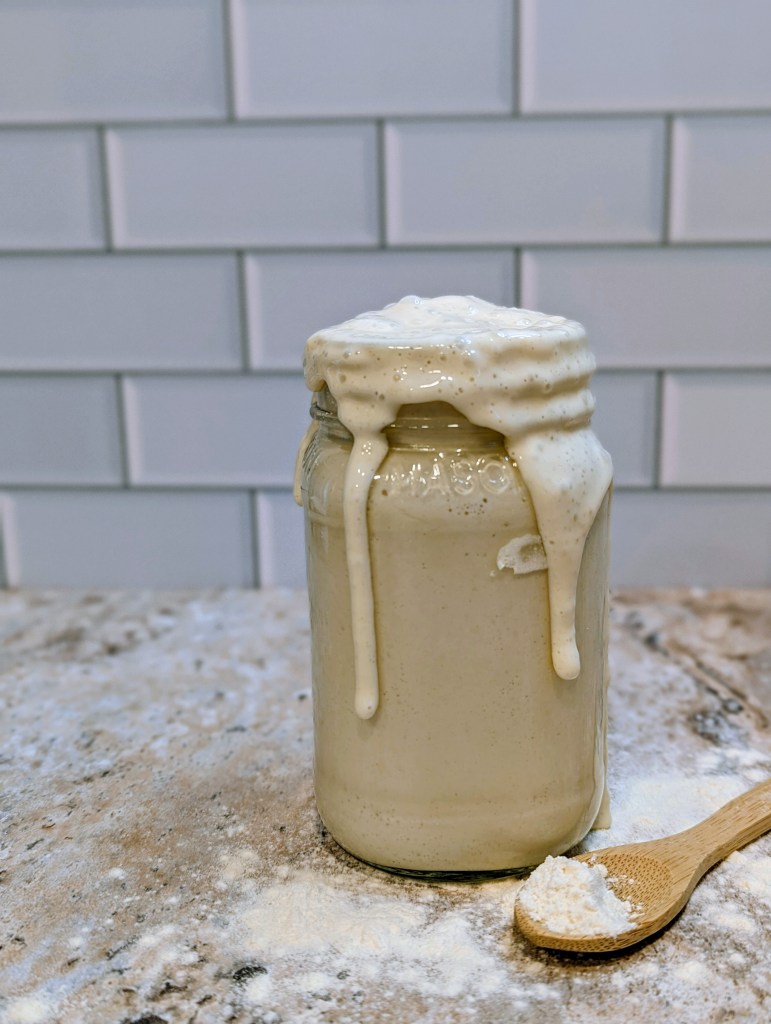
Sourdough starter is the backbone of sourdough bread. Without it, you just have standard bread. Without a good one, you have flat hockey pucks better used for weapons or sporting events. A weak sourdough starter can lead to poor fermentation and weak dough structure, which often results in a sticky, slack dough.
If your starter isn’t sufficiently active, the dough may take longer to ferment, giving enzymes more time to break down gluten.
Signs you used weak sourdough starter:
- Dough rises slowly or unevenly
- Feels slack and sticky instead of airy
- Starter doesn’t double reliably after feeding
How to fix it:
- Feed your starter consistently before baking (I include a feeding schedule with all of my sourdough recipes that use active starter.)
- Use it at peak activity (when doubled and bubbly)
- Strengthen it over a few days if it’s sluggish (more on that here)
If your starter is weak, don’t throw it out! Check out our sourdough discard recipes and turn it into something magnificent.
Quick Tips to Fix Sticky Sourdough
Hopefully, you’ve narrowed down the culprit of your sticky sourdough. Now we can talk about a few quick ways to recover it, like:
- Lightly flour your hands before handling sourdough during the shaping phase
- Wet your hands during stretch-and-folds.
- Use a bowl scraper to help you get the dough out of the bowl without making a mess of your hands.
- Add stretch and folds to build strength (or knead it for a few extra minutes if it’s not a stretch-and-fold dough).
- Let the dough rest before making adjustments
- Avoid adding too much flour late in the process
FAQ: Sticky Sourdough Dough
Why is my sourdough dough so sticky after mixing?
It’s normal for sourdough to feel sticky right after mixing. The flour hasn’t fully absorbed the water yet, and the gluten hasn’t developed. After resting (autolyse) and a few stretch and folds, the dough should become smoother and easier to handle.
Does sticky dough mean too much water?
Sometimes, but not always. Too much water is a common sourdough issue, but sticky dough can also come from underdeveloped gluten, overfermentation, or even a weak starter. It’s important to look at the overall texture and behavior of the dough.
Will adding more flour fix sticky sourdough?
It might make the dough easier to handle, but adding too much flour, especially late in the process, can lead to dense, dry bread. It’s usually better to improve technique (like stretch and folds or resting time) and measuring with a scale instead of immediately adding more flour.
Why does my sourdough get stickier over time?
This is often a sign of overfermentation. As the dough ferments, acids and enzymes begin to weaken the gluten structure, making the dough looser and stickier.
Is sourdough supposed to be stickier than regular dough?
Yes. Sourdough is typically higher in hydration than standard yeast breads, which makes it softer and slightly sticky. However, it should still be manageable and able to hold some shape.
Never Struggle with Sticky Sourdough Again!
I hope I’ve given you all the tools you need so you never have to ask “Why is my sourdough so sticky?” ever again. And even if you do, that doesn’t make you a sourdough failure. The sourdough police will not come for you if you turn a flopped loaf into sourdough stuffing, french toast casserole, or breadcrumbs (ask me how I know?). It’s going to be ok. Bread is still bread. You can try again tomorrow. Happy baking!
For More Sourdough Troubleshooting, Check Out:
Why is My Sourdough Not Rising?
Why is My Sourdough Bread Gummy? (And How to Fix it)
Why is My Sourdough Starter Not Rising?