This post contains affiliate links. Please read our disclosure policy.
Few things are more frustrating than slicing into a beautiful loaf of sourdough bread, only to find the crumb dense, sticky, or gummy inside. If you’re wondering, “Why is my sourdough bread gummy?”, you’re not alone. Gummy sourdough is one of the most common issues home bakers face, and it usually comes down to a few simple, very fixable factors.
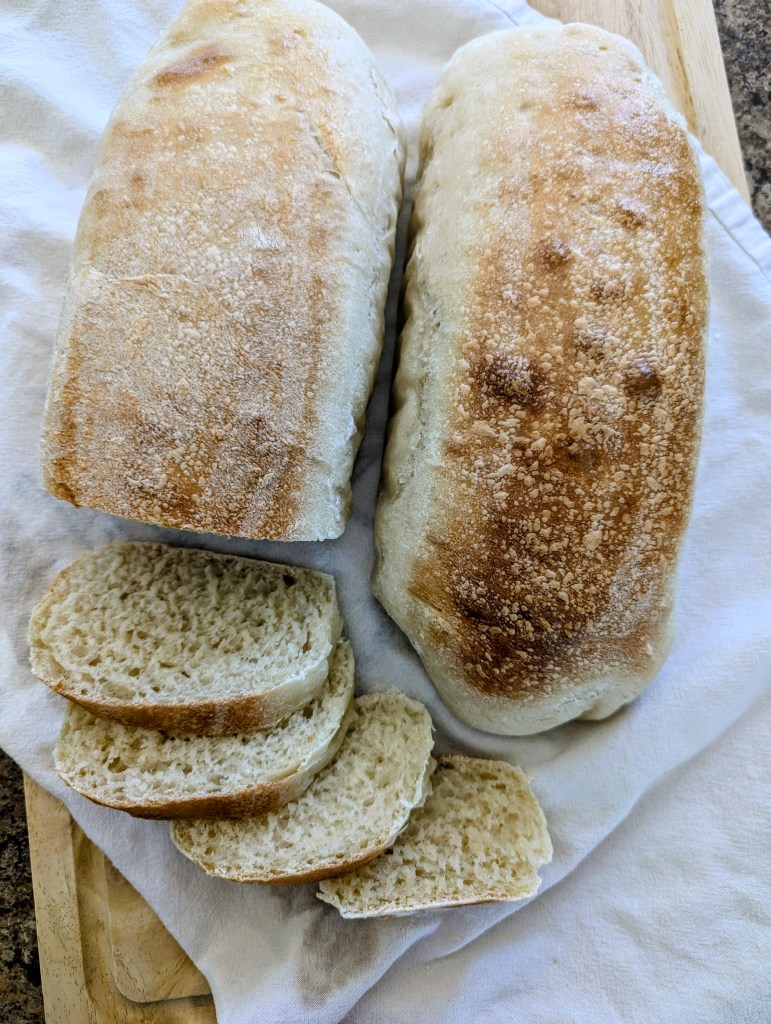
Table of Contents
Why is my sourdough bread Gummy and How the Heck do I fix it?
We’ve all been there.
We follow every single step of the recipe. We knead and stretch-and-fold until our sourdough passes the windowpane test. We let it ferment for the perfect amount of time. We bake it in our treasured Dutch oven.
Only to slice into it and find a dense, gummy mess that looks nothing like the picture or something anyone wants to eat.
“Why is my sourdough bread gummy??” You shout, wringing your hands at the only one around to hear you: the dog, who’s begging you to drop the gummy sourdough on the floor.
What have I done wrong? Is it the flour? Is it me?
Why does this always happen to me??
Deep breath, my friend. It’s not just you, and the problem isn’t you in general.
It’s likely a problem with your method. Gummy sourdough bread is something every home baker faces at some point. It’s usually a matter of hydration, fermentation, or your baking technique- all of which are totally fixable. All of which I’m going to talk you through in a calm, soothing voice.
So, don’t worry.
Instead, read on. Find the solution that’s right for you, and get back in the kitchen.
What Does “Gummy” Sourdough Mean?
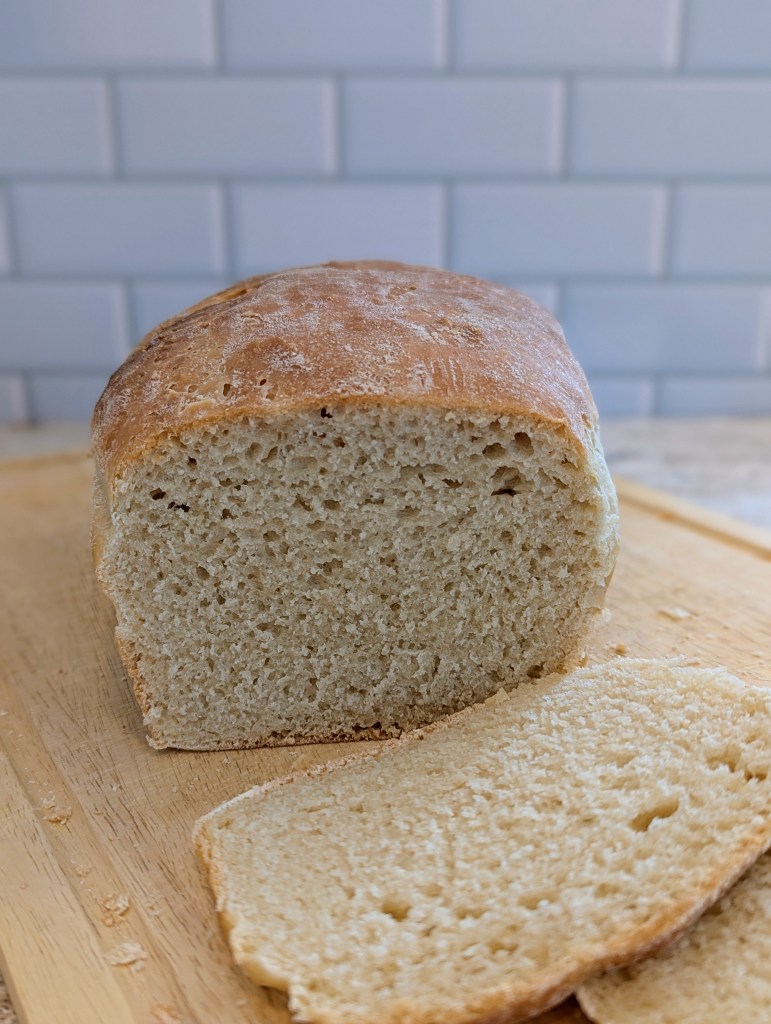
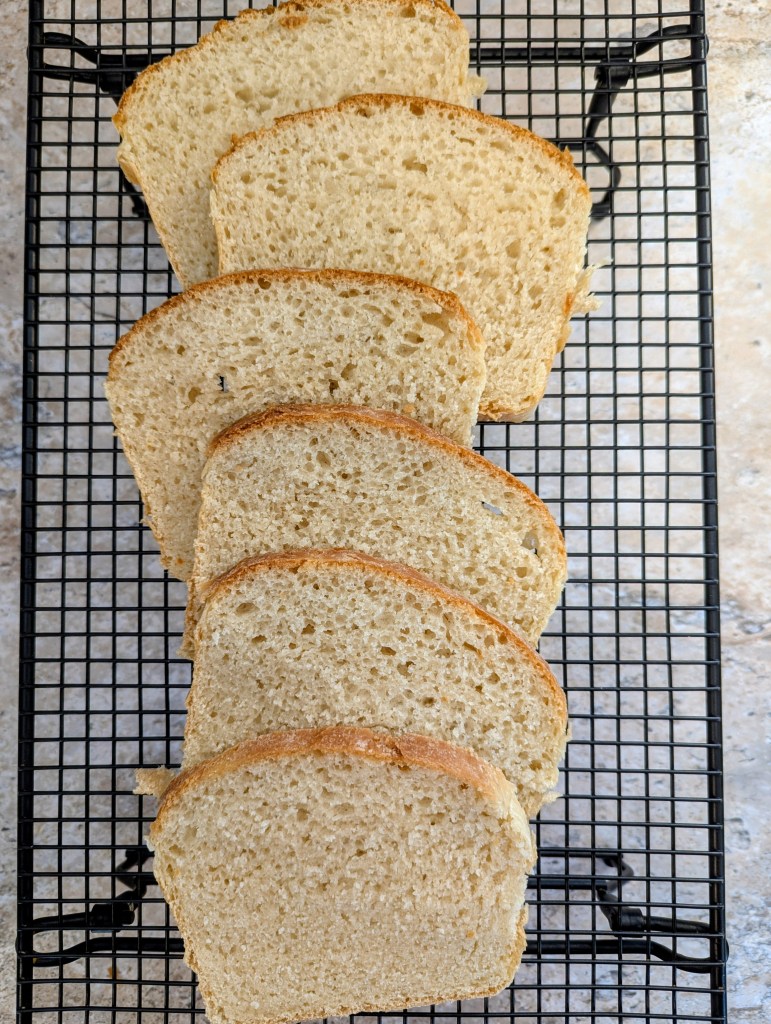
Gummy sourdough means the crumb (the inside of the bread) feels sticky, wet, or doughy rather than tender and set. When sliced, the interior may compress rather than spring back, and the crumb may appear slightly translucent or shiny. This texture is different from a moist crumb, which feels soft and fluffy but fully baked.
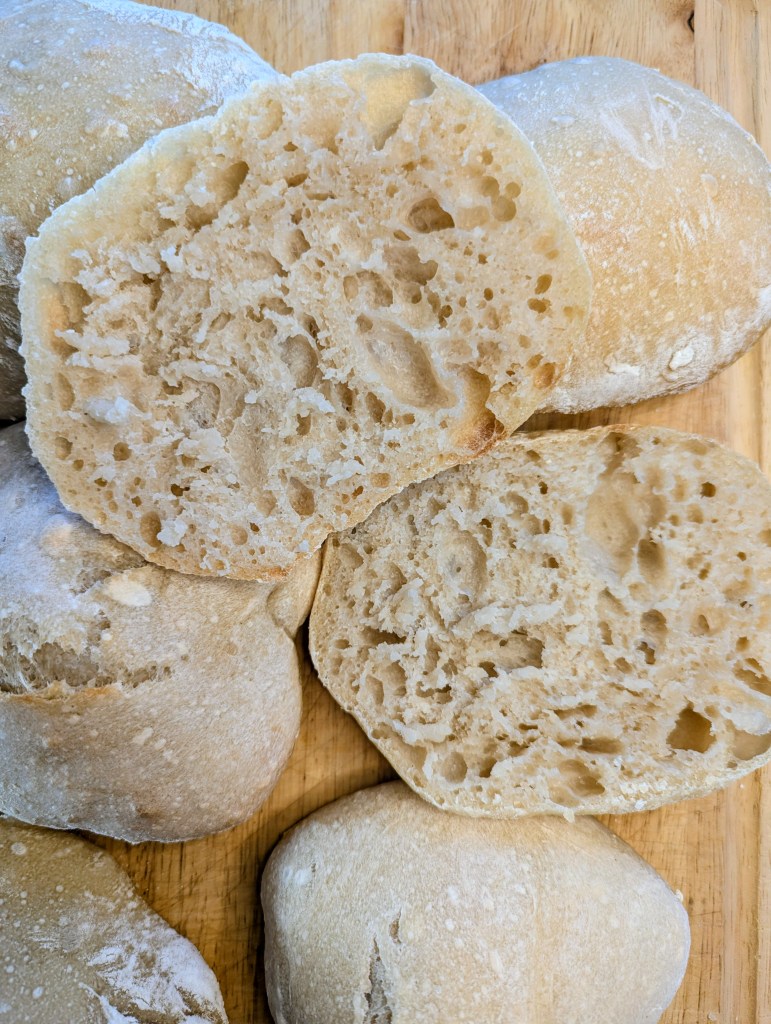
You’ve probably noticed that gummy sourdough bread will never have an open crumb (a crumb with those beautiful sourdough holes). As we discussed above, this problem lies in your baking method. If your bread fits the description above, you’re in the right place. Let’s talk about what might have gone wrong (so you don’t have to keep yelling “Why is my sourdough bread gummy?” at your poor dog).
Most Common Reasons Sourdough Bread Is Gummy
1. The Bread Is Underbaked
Underbaking is one of the most common reasons sourdough bread turns out gummy. Even when the crust looks dark and fully baked, the interior may not have reached a high enough temperature to set the crumb structure.
A loaf that is underbaked often feels soft in the center and may stick to the knife when sliced. Longer bake times, especially during the uncovered portion of baking, help drive off excess moisture and allow the crumb to fully set.
If this sounds like news to you, don’t worry. Your instructions should tell you to remove the lid of the Dutch oven (if using) toward the end of the bake time. If not, that could be your problem. Next time, try removing the lid for the last 10 15 minutes and make sure you bake for the full time so the interior can finish baking.
2. The Bread Was Cut Too Soon
This is probably the simplest but most difficult part of sourdough baking: you must let it set for 1-2 hours before slicing.
I. Know.
It’s cruel to have fresh bread on the counter that you can’t slather with butter and inhale. But this is crucial to overcoming a gummy crumb.
Sourdough continues to bake internally as it cools. Cutting into a loaf too soon releases trapped steam and interrupts the setting process, which can lead to a gummy or sticky crumb.
This is especially common with high-hydration doughs or larger loaves. Allowing the bread to cool completely gives the crumb time to firm up and stabilize.
I know it’s hard, but it’s worth the wait. It is!
3. The Dough Was Under-Fermented
Here’s yet another factor that boils down to patience: under-fermenting the dough.
Fermenting sourdough not only allows the bread to rise and breaks down the gluten to make it easier to digest, but it also produces gas that helps with gluten development.
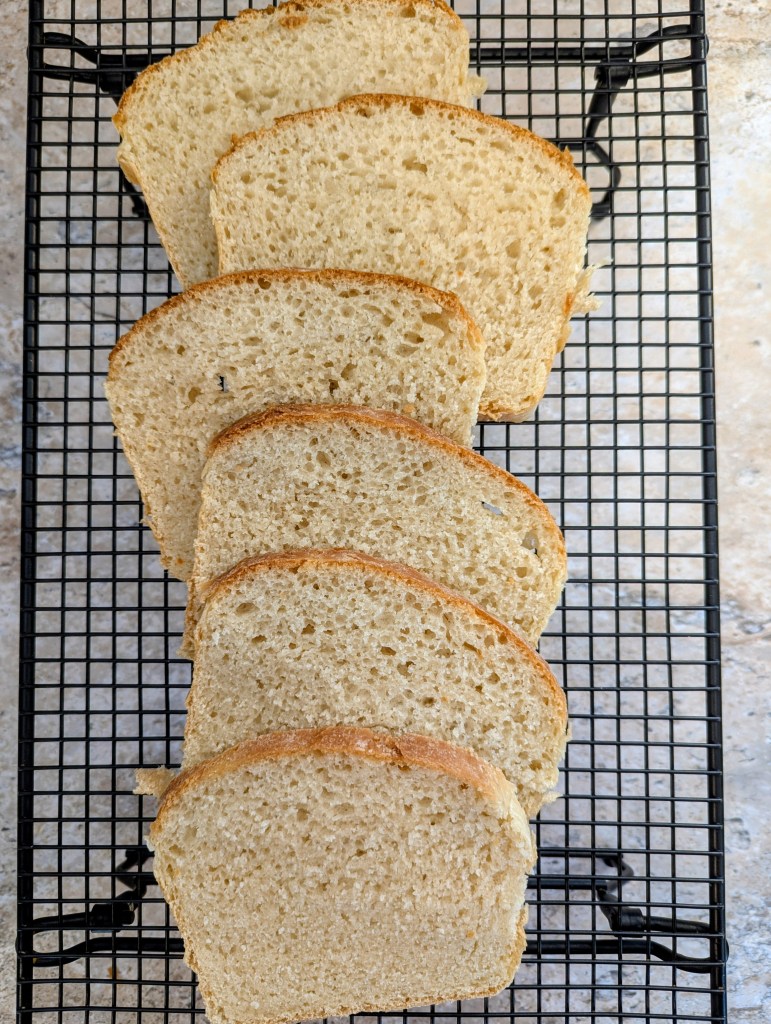
Therefore, under-fermented dough lacks sufficient gas production and gluten development. When baked, this can result in a dense or gummy interior because the dough did not develop enough structure to hold steam properly.
Signs of under-fermentation include a tight crumb, limited oven spring, and dough that feels heavy or stiff at shaping after the bulk ferment. Extending bulk fermentation and ensuring the starter is active can help prevent this issue.
Follow your recipe instructions for bulk fermentation and try not to rush. If your kitchen is under 70 degrees Fahrenheit, it might need a little extra heat to ferment properly. Try popping the bowl onto a heating pad set to low to help the fermentation process.

4. The Dough Was Over-Fermented
Here we have yet another fermentation problem (isn’t that always the way?)
Like all things in life, fermentation is all about balance.
Over-fermentation can also lead to a gummy texture. When fermentation goes too far, gluten weakens, and the dough loses its ability to trap gas and steam during baking (the opposite of what we just talked about, but the result is the same).
Over-fermented dough may spread outward instead of rising in the oven, resulting in a sad little loaf with poor structure. Adjusting fermentation time, temperature, or shaping earlier can help preserve strength.
If over-fermentation is your problem, your home could be too warm. Forget the heating pad and look for a cooler spot in your house to help slow fermentation, especially if you are doing a long overnight ferment.
5. Hydration Is Too High
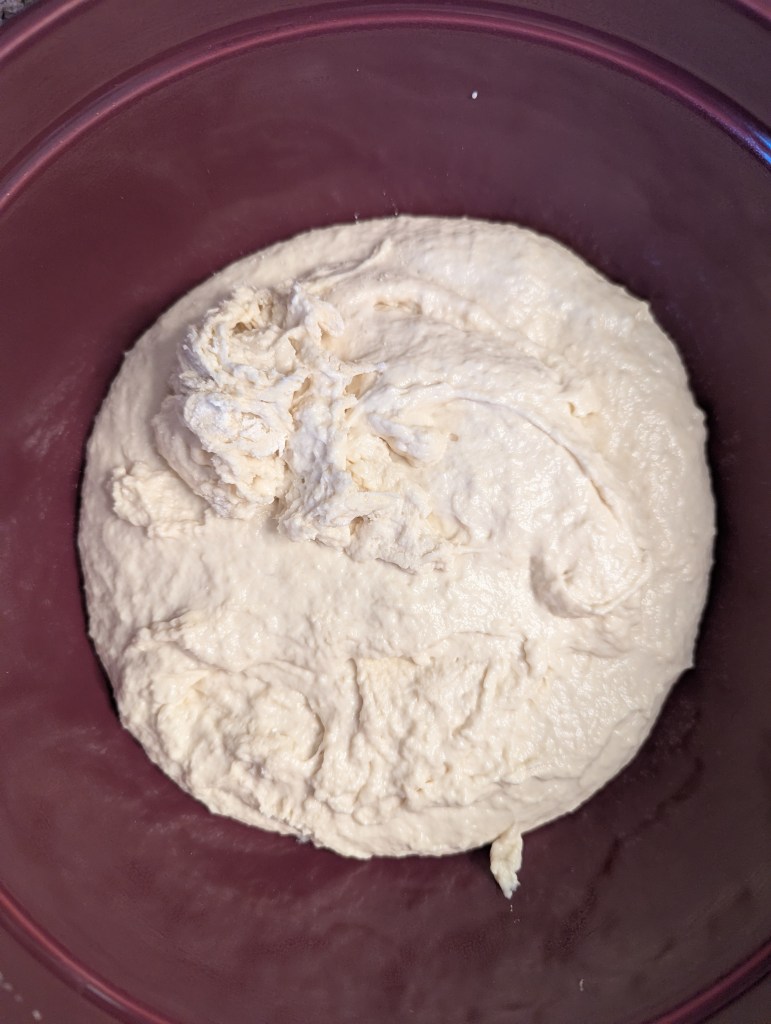
Hydration is a concept that floats around every aspect of sourdough troubleshooting. It sounds a little daunting, but here’s all it really means: water content.
That’s it. Water!
Simple, but very important.
High-hydration sourdough is more prone to gumminess, especially for newer bakers. If your sourdough is over-hydrated, excess water can remain trapped in the crumb if the dough lacks sufficient strength or if the loaf is not baked long enough.
Reducing how much water you use in your dough, building stronger gluten during bulk fermentation, or extending bake time can help improve crumb texture without sacrificing tenderness.
6. Flour Choice Affects Crumb Texture
A question I get a lot from new sourdough bakers is “What kind of flour is best for sourdough?”
My answer is usually twofold:
- The best you can afford
- Whatever the recipe calls for
I say that to make people feel more confident in baking sourdough, but there are a few things to consider if you continuously find yourself saying, “Why is my sourdough bread gummy?”
Flour type plays a significant role in how well sourdough bread sets during baking. Low-protein flours may struggle to support structure, while whole-grain flours absorb water differently and often require longer bake times.
Using bread flour with higher protein content or incorporating an autolyse can improve gluten development and reduce the risk of a gummy crumb.
Autolyse sounds fancy and complicated, but it’s just a process of mixing the flour and water in your recipe and letting it rest before adding the rest of the ingredients and continuing with thebaking method. To read more about that, check out our Sourdough Baguette Recipe.
How to Prevent Gummy Sourdough Bread
Preventing gummy sourdough often comes down to balancing fermentation, hydration, and baking time. Using a strong starter, allowing adequate fermentation, and baking the loaf thoroughly all contribute to a crumb that is set and tender rather than sticky.
It sounds like a complicated balance that you have to execute perfectly, but please remember, it’s just flour and water. It’s not as complicated as it sounds. Once you get the hang of what sourdough should feel like and how long it needs to ferment, you won’t have any trouble.
Finally, you’ve got to let it cool before you cut it. You just do.
Slicing it too early will undo all of your hard work, and I don’t want that for you.
Quick Troubleshooting Checklist
To keep yourself from wringing your hands, wondering “Why is my sourdough bread gummy?” Consider the following questions:
- Was the loaf baked long enough?
- Did I let it cool completely before slicing? (Did I really?)
- Was the dough fully fermented?
- Was the hydration appropriate for the flour used?
- Was the starter active and at peak strength?
FAQ: Gummy Sourdough Bread
Is gummy sourdough caused by underproofing or overproofing?
Gummy sourdough can be caused by either! Underproofed bread often has a dense, doughy crumb, while overproofed bread lacks structure and may collapse.
Is sourdough supposed to be slightly chewy?
Yes. A mild chew is normal and expected in sourdough bread. Gumminess, however, indicates excess moisture or insufficient structure.
Can gummy sourdough be fixed after baking?
Gummy sourdough can’t be fully fixed after it’s done baking, but slicing and toasting can improve the texture. You can also dry the bread to use as sourdough breadcrumbs or sourdough stuffing. Your best bet to preventing gummy sourdough is narrowing down the underlying cause will lead to better results in future bakes.
You’re On Your Way!
See how simple that was? You’re on your way to never asking “Why is my sourdough bread gummy?” ever again. Soon, you’ll know exactly what perfectly hydrated sourdough should feel like, the ideal fermentation time for your home, and most importantly, you’ll learn to never slice it too early. If all else fails, put your slices of bread in the toaster and slather them with butter. They’re still bread, after all. Happy baking!
[…] Why is My Sourdough Bread Gummy? […]
[…] Why is My Sourdough Bread Gummy? (and How to Fix It) […]
[…] Why is My Sourdough Bread Gummy? […]